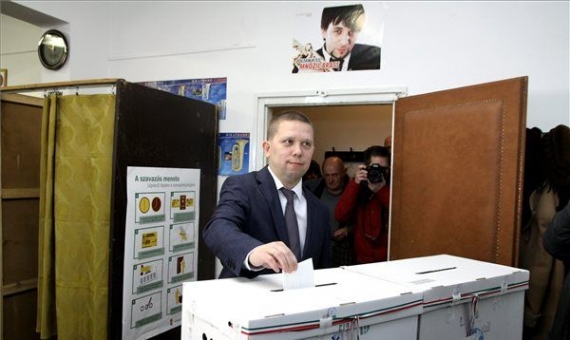
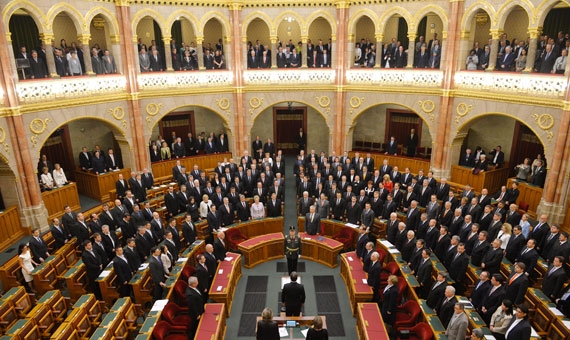
The governing party Fidesz won the Hungarian parliamentary elections held this Sunday. It is yet to be seen whether Viktor Orbán's party can retain its two-thirds majority since a few constituencies are too close to call.
In a thoroughly substantiated opinion written for a recent issue of Diplomacy & Trade, constitutional lawyer György Kolláth is of the view that the new election rules introduced by the governing two-thirds majority clearly favor the governing party.
Hungarians go to the polls this Sunday to elect a new parliament under new rulesset by the current government and passed by the governing two thirds majority - rules that are considered by experts to produce more disproportionate results.
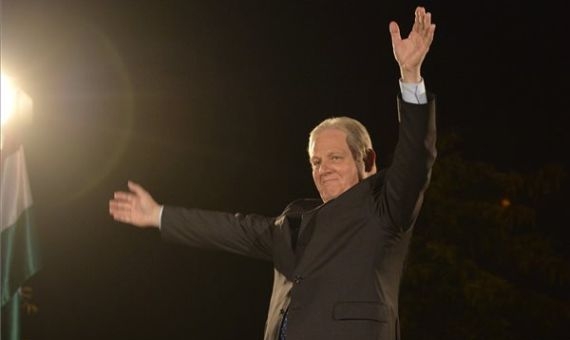
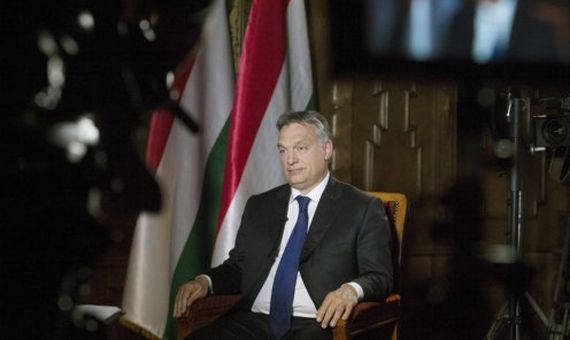
“Hungary's economy has produced the best results in more than ten years, with the country arriving at the threshold of a great era of prosperity,” Prime Minister Viktor Orbán claimed this Sunday. The opposition said his speech “lacked reality."
President János Áder announced the date for the 2014 parliamentary elections in Hungary: Sunday, April 6. The opposition parties are not surprised as the MPs of the ruling party Fidesz had inadvertently dropped a word about it already.
According to Transparency International’s Corruption Perception Index 2013, Hungary ranks 23rd out of 31 European countries, which puts it in the top third of the most corruption-infected economies in Europe. The worst CPI score in Europe was given to Greece.
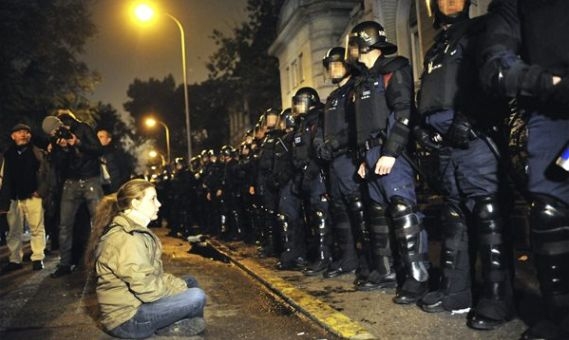
Both the governing party and the opposition parties held demonstrations with leading politicians speaking on the 57th anniversary of the 1956 uprising against the Stalinist regime. All speeches were geared towards next spring's elections.
According to the majority of Hungarians (61%) corruption has increased in the past two years, and governmental corruption is a serious issue. That is according to the 2013 annual report presented by Transparency International this week.
The European Parliament says Hungarian authorities must remedy any breaches of key EU values swiftly. If they fail to do so, EP leaders should consider asking the Council of the EU to determine,whether there is a clear risk of a serious breach.
Former Hungarian Prime Minister Gyula Horn, who played a key role – as Foreign Minister – in bringing down the Iron Curtain by letting East Germans cross the border to Austria, has died at the age of 80 after spending over six years in hospital.
This Friday, Hungarian Foreign Minister János Martonyi announced that the government was ready to remove two provisions of the country’s Fundamental Law (constitution) in response to the objections of the European Commission.
Former Hungarian President László Sólyom called for an end to the battlefield behavior among the political right and left in Hungary, speaking at a conference organized by the foundation of the small opposition party LMP this past Sunday.
"The Government of Hungary’s decision to award a national prize to Ferenc Szaniszló, an individual who has publicly engaged in hate speech, is deeply disappointing," according to the American ambassador to Hungary, Eleni Tsakopoulos Kounalakis.
Deputies of Hungary’s ruling Fidesz party approved a set of changes to the country's constitution which critics, including the European Union's executive and several member-state foreign ministers, say pose a danger to democracy and the rule of law.
Hungary's governing party Fidesz abandoned plans to require voters to sign up beforehand to be able to vote at the 2014 national elections and other referendums, after the Constitutional Court threw out some of the proposed legislation.