The European Commission recommends Hungary to achieve annual fiscal adjustments and lower sector-specific taxes, reduce the tax wedge for low-income earners and facilitate the transition from the public work scheme to the primary labour market.
The European Commission recommends Hungary to achieve annual fiscal adjustments and lower sector-specific taxes, reduce the tax wedge for low-income earners and facilitate the transition from the public work scheme to the primary labour market.

Hungary’s 0.8% quarter-on-quarter GDP contraction in January-March was the sharpest drop in the entire bloc and the only country that fared worse than Hungary in terms of yr/yr growth was recession-ridden Greece, portfolio.hu quotes Eurostat.

Hungary’s consumer prices rose 0.9% year on year in January 2016. The consensus forecast in a poll by the financial website portfolio.hu showed that inflation accelerated to 1.1% from 0.9% in December, i.e. the actual CPI reading undershot expectations.

The volume of Hungary’s industrial production rose by 1.7% month on month in October, the Central Statistical Office (KSH) reported this Tuesday. As last October, the sector fared especially poorly, the year-on-year reading came to a pleasant 12.7%.

Hungary’s gross domestic product rose by 0.5% quarter on quarter in the July-September period of 2015, the Central Statistical Office (KSH) reported on Friday. According to figures adjusted for calendar effects, growth slowed to 2.3% year on year.
Consumer prices in Hungary rose by 0.1% year on year in October, the Central Statistical Office (KSH) reported on Tuesday. The financial website portfolio.hu says the market expected CPI to tick up to-0.1% from -0.4% in September.

The SME sector struggling in Hungary with a sharp rise in bankruptcies and a shattered structure of companies. That was one of the issues were addressed at the Portfolio CEE Private Equity & Corporate Finance conference in Budapest.

The Hungarian government projects 2.9% of GDP budget deficit for 2014 and over 3% economic growth for 2017 in its convergence program sent to the European Commission. The program was outlined to the press by Economics Minister Mihály Varga.

In Hungarian Parliament on Monday, Prime Minister Viktor Orbán presented a program to increase jobs, consisting of ten points including major cuts in social security contributions and new simplified taxes for small businesses.
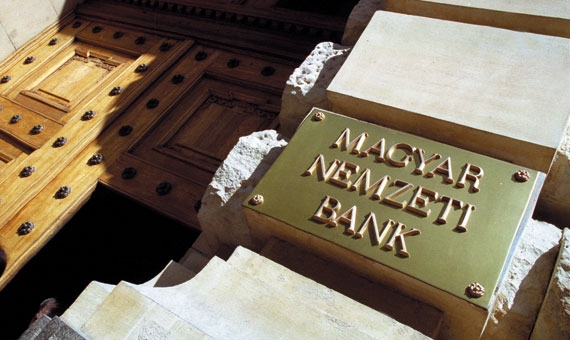
As requested over the weekend by Hungary’s chief aid negotiator Mihály Varga, who saw the pressure on the Hungarian market, Hungarian Parliament put off the vote on the planned amendments to the central bank law on Monday.

EU executive José Manuel Barroso has called on Hungarian Prime Minister Viktor Orbán to ensure that the nation’s Central Bank remains independent despite a controversial reform that gives the government more control over the bank.
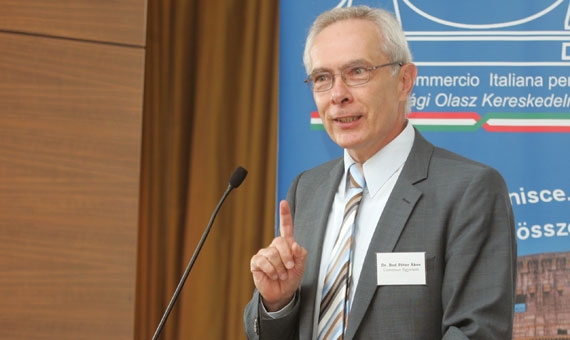
Former minister of industry, Péter Ákos Bod, has told an audience of businesspeople in Budapest that - unlike the government - he does not expect economic growth next year, and the level of consumption is likely to remain low.

As a result of a EUR 3.75 billion US dollar bond issuance at the end of March, Hungary’s international reserves jumped to an all-time high EUR 35.7 billion in the third month of 2011, according to the central bank (NBH) on Thursday.
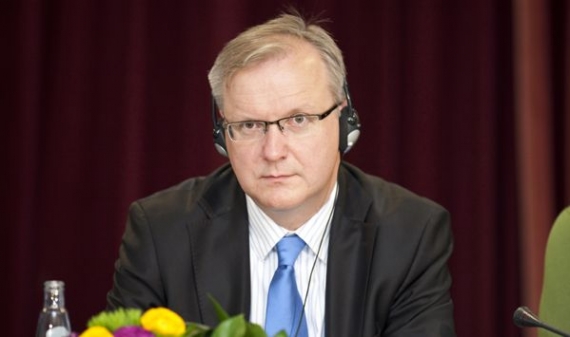
The European Commission sees clear signs in the measures in Hungary’s reform package that the country is on the right track towards fiscal consolidation, European Commissioner for Economic and Monetary Affairs Olli Rehn said in Brussels.

The European Commissioner for Economic and Financial Affairs, Olli Rehn has contacted the Hungarian government in writing, asking for a list of planned reform steps, the Hungarian business daily Világgazdaság said on Tuesday.