In May 2017 and in the initial five months of 2017, the industrial sector posted output growth of 8.8% and 5.7%, respectively, compared to the corresponding period of the previous year. Thus, Hungarian data have beaten corresponding EU averages.

In May 2017 and in the initial five months of 2017, the industrial sector posted output growth of 8.8% and 5.7%, respectively, compared to the corresponding period of the previous year. Thus, Hungarian data have beaten corresponding EU averages.
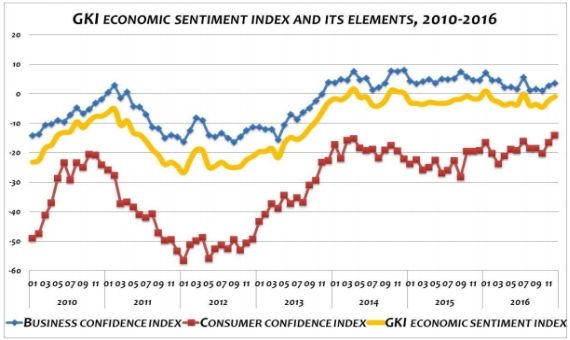
After November, the GKI economic sentiment index rose again in December. According to
the empirical survey by GKI, business expectations increased slightly, whereas consumer ones went up more strongly, reaching their ten-year peak.
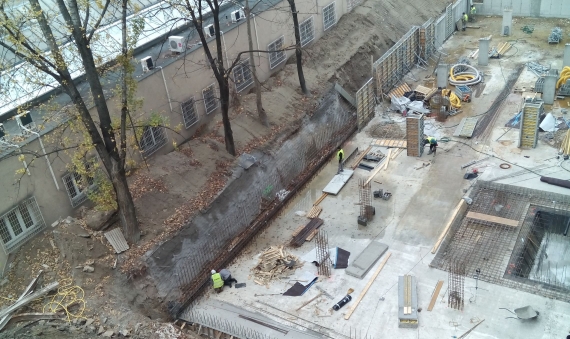
The volume of investments in Hungary contracted by 9.3% y/y in the third quarter of 2016. This decrease, portfolio.hu notes should not be considered as dramatic, though, given that investments grew by 2.7% over the previous quarter.

Following its three-year low in October, Hungary's GKI economic sentiment index (issued with the support from the EU) strengthened to its spring level in November. both business and consumer expectations improved in November.
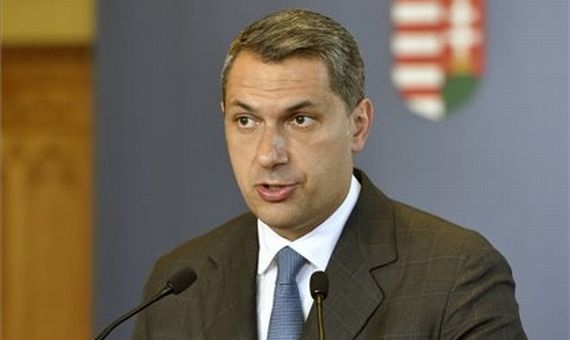
The Hungarian Prime Minister’s cabinet chief, János Lázár announced at his regular weekly briefing this thursday that the country must find the wqys to be more competitive and catch up with Poland in the Visegrád Group.

After reaching its lowest point this year in August, the GKI economic sentiment index rose within the statistical margin of error in September 2016. That is according to the empirical survey conducted by Hungarian think tank GKI.

A new set of data are evidence that labour shortage is becoming an increasingly pressing problem in the Hungarian economy. The number of job vacancies grew by over 3,000 in the second quarter since the end of March 2016, portfolio.hu reports.

A law amendment changing the regulation of the excise tax on fuels will come into effect in Hungary in early September. In view of the current market developments, chances are high that the excise tax on both gasoline and diesel will rise as of October.

The volume of investments in the Hungarian economy was 20.3% lower in the second quarter of 2016 than in the same period of 2015, the Central Statistical Office (KSH) reported on Wednesday. Compared to the previous quarter investments were down 0.8%.
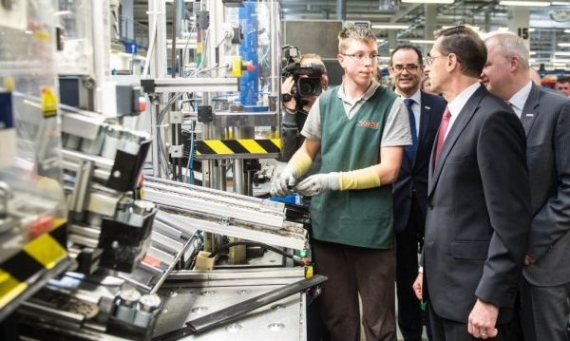
The Ministry for National Economy expects stagnating industrial output growth to be transitory in Huntary, as both order volume and industrial confidence indices are pointing to further expansion, Minister of State István Lepsényi pointed out.

If the economic processes remain constant and productivity improves further Hungary’s accession to the euro area by the end of this decade "should not be groundless", Economy Minister Mihály Varga is quoted by portfolio.hu as saying .
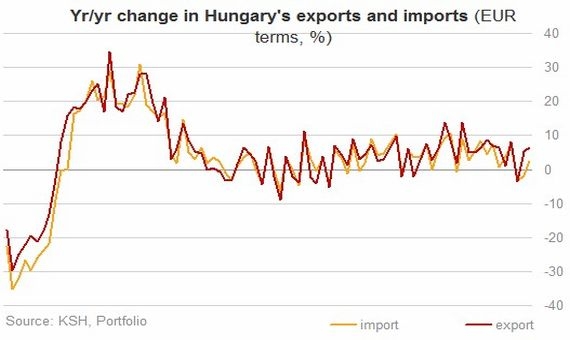
The volume of exports in euro terms was up 6.3% in May 2016, while imports grew 2.4% compared to May 2015, the Central Statistics Office is quoted by portfolio.hu. The foreign trade surplus was EUR 755 mn, setting a new record.

Hungary’s GDP per capita (purchasing power parity) reached 68% of the European Union average in 2015, a Eurostat report showed on Wednesday. The Hungarian figure is better than Latvia’s and those member states that joined the EU after 2004.
The OECD projected hardly a month ago that the Hungarian economy will grow by 2.5% year on year in 2016. However, this forecast has been cut sharply to 2016 in the OECD’s latest Economic Outlook published this Wednesday.
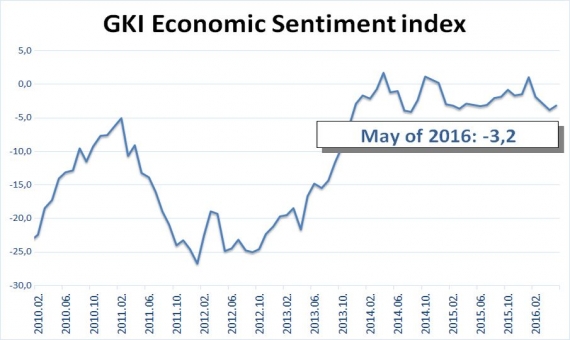
The decline of the GKI economic sentiment index that started this January, stopped in May. The business confidence index remained unchanged compared to April. However, consumer expectations almost reached their peak value this year.