Júlia Király, a former Deputy Governor of the National Bank of Hungary (NBH) will continue her career at KBC Group as member of the Board of Directors, the Belgian bank has announced. In the Board, she is going to replace Professor Dirk Heremans.

Insider reviews, first hand infos and more.
Júlia Király, a former Deputy Governor of the National Bank of Hungary (NBH) will continue her career at KBC Group as member of the Board of Directors, the Belgian bank has announced. In the Board, she is going to replace Professor Dirk Heremans.

The Hungarian Banking Association considers free cash withdrawals just passed by lawmakers unfair and also detrimental on a social level. The new law requires banks to offer ATM withdrawals for free, yet pay tax on the transactions.

New Hungarian foreign trade figures published by the Central Statistics Office (KSH) show a promising pickup. Data show an increase both in exports and imports for September and the trade surplus has not been this large since early 2011.
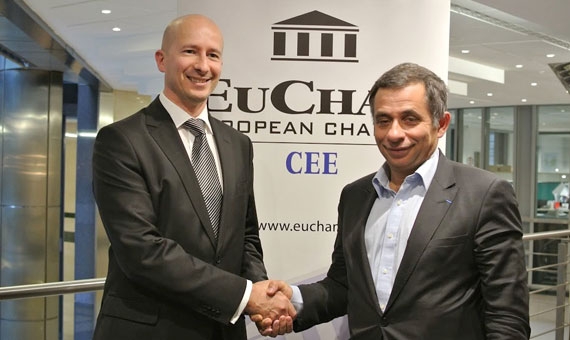
The President of the European Economic and Social Committee (EESC), Henri Malosse has been received by the European Chamber (EuCham) in Budapest, where they discussed achievements and high-profile projects of both institutions.
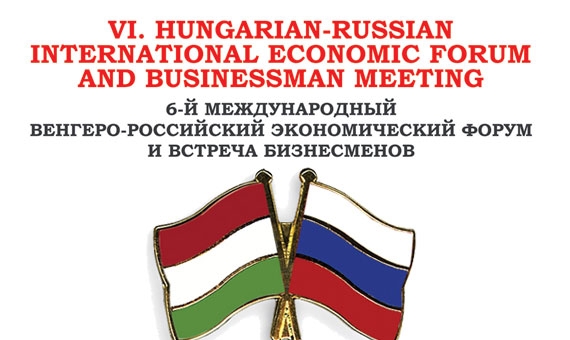
On October 24 to 25 the Entrepreneurs' Club Association organizes the 6th Hungarian-Russian International Economic Forum and Businessman Meeting at the Hotel Helia in Budapest. The event features guest speakers from the United States and Russia, as well.
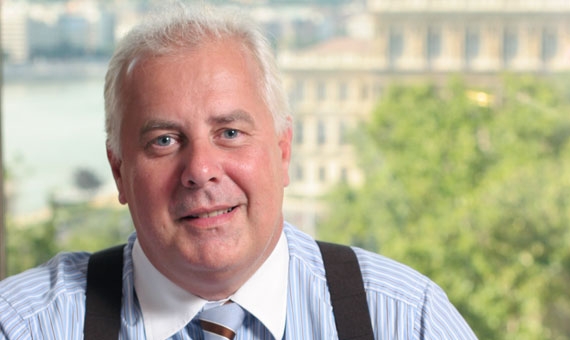
The French-Hungarian Chamber of Commerce and Industry (CCIFH) calls for long-term predictability. That is the essence of the interview CCIFH President, Antoine Guego gave to a recent print edition of Diplomacy & Trade.
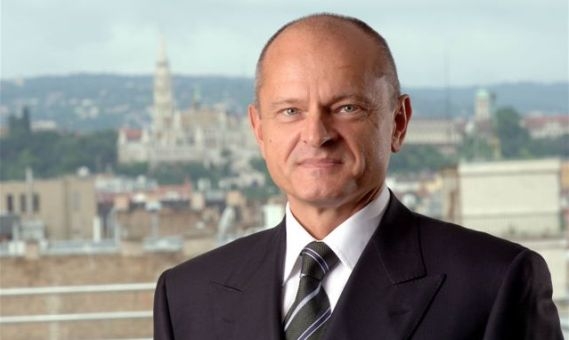
The Hungarian Banking Association cannot accept the ultimatum given to financial institutions by the government, because the banks cannot solve the problem of foreign currency mortgages on their own, without a contribution by the state.

Hungary ranks 63rd - three places worse than last year - on the World Economic Forum’s Global Competitiveness Index (GCI 2013-2014), which features a record number of 148 economies. This puts Hungary to the 24th place in the 28-member EU.

Hungary repaid its outstanding SDR 1.9 billion (EUR 2.15 bn) debt to the International Monetary Fund (IMF) on August 12. The governing party welcomes the move while the opposition considers it a costly communication bluff.

The Hungarian European Business Council, incorporating the most important international companies present in Hungary, has published its 15th annual report, calling on the Hungarian government to create "confidence and credibility."

EU finance ministers decided to endorse the European Commission’s recommendation of May 29 to abrogate the excessive deficit procedure (EDP) for Hungary. The country has been in the EU’s fiscal cuffs since its accession to the bloc in 2004.
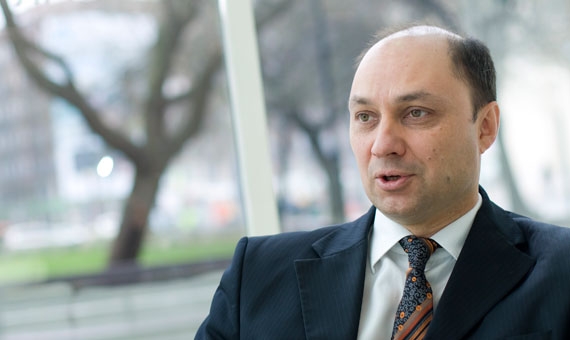
'Our approach has always been to help foster bilateral economic relations,” the President of the now 5-year-old Hungarian-Bulgarian Chamber of Commerce, Rossen Tkatchenko explains in a recent interview published in Diplomacy & Trade.

The Hungarian government has announced additional fiscal adjustment measures to avoid the reopening of the excessive deficit procedure (EDP) against the country once EU finance ministers agree to abrogate the EDP for Hungary.

The Hungarian-Israeli Joint Economic Committee met for the second time in Jerusalem on May 29 to discuss the possibilities of developing cooperation between the two countries. The first meeting of this Joint Commission was held in 2009, in Budapest.

The Hungarian Minister of National Economy Mihály Varga announced that in order to ensure that the European Commission’s excessive deficit procedure against the country is lifted, the government will freeze HUF 92.9 billion in the 2013 budget.