
Hungary’s economic recovery faced a fresh setback in May as wage growth fell to its slowest pace in more than two years, signaling weakening household purchasing power and raising doubts about a consumer-driven rebound ahead of the 2026 election.
Data released this week by the Hungarian Central Statistical Office showed that average gross wages rose by just 7.8% year-on-year, significantly below even the most pessimistic analyst forecasts. At companies with at least five employees, the increase was slightly lower at 7.7%, marking the weakest growth since February 2023. The reading followed a 9.8% rise in April and stood in stark contrast to the nearly 15% increase recorded in May 2023.
The slowdown comes at a time when the government is banking on household spending to revive an economy still struggling after a first-quarter GDP contraction, falling industrial output, and lagging investment. Despite efforts to stimulate demand through price caps and subsidized loan schemes, consumer confidence has failed to rebound.
According to ING Bank analysts in Budapest, the modest 3.2% increase in the real value of net wages in May reflects the erosion of purchasing power in the face of persistent inflation. “The change in the purchasing power of households resulting from the combination of high inflation and high nominal wage growth is undesirable in the long term,” ING wrote in a research note. “Compared to the double-digit real wage increases of late 2023 and early 2024, this slowdown is likely to make consumers feel worse off.”
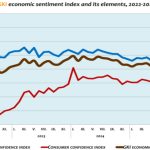
The impact is already visible. Data released last week showed a sharper-than-expected drop in retail sales, suggesting that consumers have started to pull back after a temporary boost around Easter. The broader concern is that households are now less optimistic about their finances: the consumer confidence index has fallen to a one-and-a-half-year low in the past two months.
One key factor may be the private sector's reluctance to raise wages. Although the government struck a deal with employers last year to increase the minimum wage by 40% over three years, companies appear increasingly cautious about lifting salaries across the board amid economic uncertainty.
For the Hungarian National Bank (MNB), the easing in wage growth could be welcome news. Double-digit salary increases over the past two years contributed to spiraling business costs and heightened inflation expectations. Keeping these in check is crucial to the central bank's long-term credibility. The MNB left its key interest rate at 6.5% for a ninth consecutive month in June and is expected to revisit the issue next week.
Still, for Prime Minister Viktor Orbán’s government, which is under pressure to restore economic momentum before the next election, slowing wage growth complicates the picture. As household sentiment deteriorates, the path to recovery through consumer spending looks increasingly uncertain.


Top 5 Articles
 What Awaits the Hungarian Economy in 2026 and 2027? April 24, 2026
 - Cherishing Italian Cultural Presence in Hungary September 3, 2026
- Consolidating the Good Bilateral Relations May 10, 2026
- Two Vantage Points, One Direction August 22, 2026
- Business, Consumer Confidence at Two-Year High in April April 23, 2026