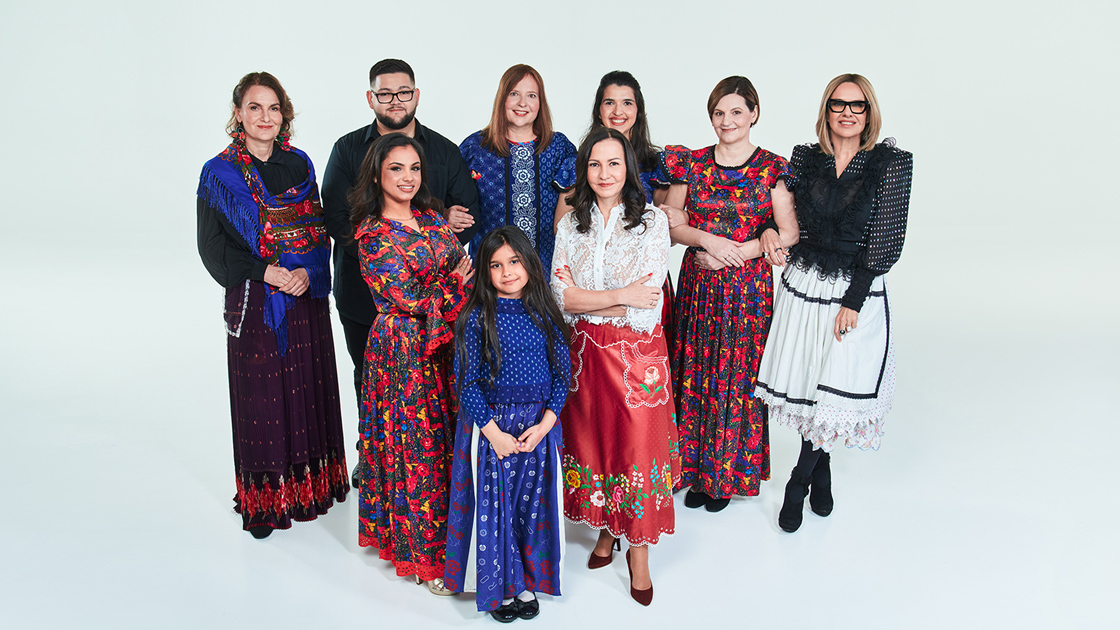

Talent is evenly distributed across society: in every town and in families of all social and economic backgrounds, there are talented young people. Access to opportunity, however, is far from equal. This structural challenge is the focus of a campaign launched by the Hungarian Business Leaders Forum (HBLF) on the occasion of the International Roma Day.
The initiative is supported by nine prominent female business leaders who believe – both in their professional roles and on a societal level – that the ability to succeed should not depend on the circumstances into which someone is born. The campaign’s professional credibility is reinforced by the Romaster Foundation, established by HBLF. The initiative is implemented in partnership with Romani Design, which also believes that recognizing and supporting talent is not only a social issue, but an economic one as well.
Who decides who gets to become a professional?
The Roma community is the largest minority in Hungary, yet Roma professionals are rarely represented in leadership positions within the business sector. HBLF finds it important to emphasize that this is not due to a lack of talent, but rather the result of limited social mobility.
This is why the HBLF–Romaster Foundation was established: to support Roma students’ access to higher education in collaboration with the business sector, and to create conditions where equal opportunity becomes a reality rather than a slogan.
According to Hungarian data, Roma employment rate is approximately 45.9% vs. 77.9% for the total population; employment rate of Roma women is approximately 34%; nearly 40% of Roma youth are neither in education nor employment (NEET); only 3.3% of Roma adults have a higher education degree; and around 7% of Roma employees work in white-collar jobs.
These disparities, the Foundation says, are not the result of individual choices, but of overlapping structural disadvantages, including access to education, social capital, networks and institutional practices.
Future truly belongs to everyone
The goal of the HBLF–Romaster Foundation is to support talented Roma youth and raise awareness that access to opportunity should be universal.
HBLF President Andrea Istenes Solti highlights that “as female leaders, many of us have experienced what it feels like to be in a minority in the business world. Perhaps that is why we feel it is especially important to stand up for a cause that creates opportunities for others. As influential leaders, we have a responsibility to give back to society and to show the way for young people who have the talent. I believe that when opportunity meets talent, the future truly belongs to everyone.”
As the Founder and Artistic Director of Romani Design, Erika Varga puts it, “for us, Romani Design is not primarily about visibility, but about who shapes the future and what values they represent. Wearing Romani Design is a visible gesture in support of a mindset that values talent, dignity, cultural heritage and social responsibility at the same time.”
A collective response to a social challenge
A key element of the campaign is demonstrating that business leaders can actively shape these processes. This is reflected in the involvement of leading female executives such as Nikolett Blaskó (Founder and CEO, ACG Advertising Agency), Teodóra Bodó (Head of Communications and Government Relations, Bosch Hungary and Adriatic Region), Éva Hegedűs (Chairman and CEO, Gránit Bank), Gabriella Heiszler (Chairman-CEO, SPAR Hungary), Andrea Istenes Solti (President, HBLF), Tímea Jamniczky (CEO, JCDecaux Hungary), Beáta Juvancz (Managing Director, BlackRock Hungary), Krisztina Kende-Hofherr (Communication Expert, Director of MVÜK Women’s Business Club), Zsófia Makádi (Managing Director, Romaster Foundation) and Mónika Pais (CEO, Diageo Hungary).
In addition, Hungarian brands such as Romani Design and REKAVAGO, as well as ACG agency, Bobbi Brown and Jean Louis David also contributed to the creative execution of the campaign.
The campaign message is further supported by a fashion exhibition held between April 8 and 30 at the Pullman Hotel in downtown Budapest.
Access to opportunity
The Hungarian Business Leaders Forum launched the ROMASTER talent development program in 2007, followed by the establishment of the HBLF–Romaster Foundation in 2010. Through mentoring, corporate partnerships and long-term support, the program aims to reduce structural barriers to social mobility.
This campaign highlights how access to opportunity can become systemic, and how both individuals and companies can contribute to making this mindset the norm. It emphasizes that while social mobility is not the responsibility of a single institution or actor, the business sector plays a crucial role in connecting talent with opportunity.


Top 5 Articles
 What Awaits the Hungarian Economy in 2026 and 2027? April 24, 2026
 - Consolidating the Good Bilateral Relations May 10, 2026
- Cherishing Italian Cultural Presence in Hungary September 3, 2026
- Two Vantage Points, One Direction August 22, 2026
- Business, Consumer Confidence at Two-Year High in April April 23, 2026