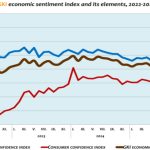
Hungary continues to face entrenched inflationary pressures, with new data confirming that price growth remains stubbornly high despite regulatory efforts by the government. Analysts expect this volatile trend to continue in the months ahead.
Inflation accelerated in June, driven by rising costs in food, household energy, and services—even as Prime Minister Viktor Orbán’s administration enforced price caps and negotiated voluntary freezes with major service providers. According to the latest data from the national statistics office, the consumer price index rose by 4.6% year-on-year, in line with economists’ expectations and marking the highest rate since March. Prices edged up 0.1% compared to May.
The government has attempted to temper inflation through temporary profit limits on essential items like food and pharmaceuticals, and by persuading companies in banking and telecommunications to hold off on price hikes. Yet these measures appear to be falling short.
“Despite these interventions, inflation remains a problem, sitting well above the upper end of the National Bank of Hungary’s inflation tolerance band,” ING Bank in Budapest noted in a research report. “Thus, despite all efforts, Hungary continues to have high structural inflation.”
While core inflation eased slightly in June, it still registered at a high 4.4%, indicating persistent price pressures. The bigger concern now is whether household inflation expectations can begin to moderate after four months of subdued repricing. So far, improvements have been marginal—insufficient to anchor long-term expectations.
The consumer price index continues to exceed the Hungarian central bank’s 3% target band, despite the cabinet’s direct intervention in several CPI components. Food prices climbed 6.2% from June 2024, with basic items such as eggs and flour soaring by more than 20%. Household energy bills increased by 8.6%, and service costs rose 5.4% over the same period.
Looking ahead, ING expects inflation to dip to around 4% in the coming months due to the high base effects from last year. However, the bank warns that this slowdown could be temporary, with weather-related shocks—such as June’s drought and severe storms in July—posing upside risks to unprocessed food prices. “Although inflation will dip to around 4%, any subsequent price stability will only be apparent and temporary,” the bank said. “The inflation rollercoaster is slowing down, but this could be deceptive.”
The data is likely to reinforce the National Bank of Hungary’s cautious stance on monetary policy. The central bank kept its benchmark interest rate unchanged for the ninth consecutive month in June, diverging from regional peers who have begun easing. Fresh forecasts point to continued inflation risks and sluggish economic recovery, justifying a measured approach to rate-setting.


Top 5 Articles
 What Awaits the Hungarian Economy in 2026 and 2027? April 24, 2026
 - Cherishing Italian Cultural Presence in Hungary September 3, 2026
- Consolidating the Good Bilateral Relations May 10, 2026
- Two Vantage Points, One Direction August 22, 2026
- Business, Consumer Confidence at Two-Year High in April April 23, 2026