
Hungary’s business sentiment took a sharp hit in July, plunging to levels last seen during the pandemic, in a further indication that the country’s economy may be teetering on the edge of another recession.
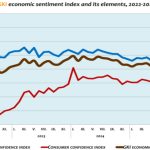
Hungary’s business sentiment took a sharp hit in July, plunging to levels last seen during the pandemic, in a further indication that the country’s economy may be teetering on the edge of another recession.According to the GKI research institute, the Business Confidence Index dropped by 2.1 points to -14.8, marking its lowest reading since June 2020. Consumer sentiment remained deeply pessimistic, pushing overall economic confidence to -19.2, the weakest since late 2022.
The reading underscores concerns that the country is facing deep economic challenges. The latest data from Hungary’s statistics office showed the economy contracted 0.2% quarter-on-quarter in Q2, with zero growth on an annual basis. This fell short of expectations; analysts surveyed by Bloomberg had forecast 0.4% growth on both counts.
The disappointing figures deal a blow to Prime Minister Viktor Orbán’s economic narrative ahead of the 2026 election. After last year’s recession, the premier had promised a “flying start” to 2025. But with growth stalling and inflation lingering, the government has begun backtracking on its forecasts.
Retail activity, a key pillar in the government’s growth strategy, is also faltering. Workday-adjusted sales rose just 2.1% in May year-on-year, significantly below the 3.7% median forecast in a Bloomberg poll. In monthly terms, sales dropped 1.3% from April.
While the Economy Ministry maintains that “all conditions are there” for consumption to drive growth in the short term, recent numbers suggest a mismatch between policy optimism and consumer reality.
This economic malaise appears to be feeding political volatility. The opposition Tisza party, led by Péter Magyar, has surged ahead in most opinion polls, buoyed by voter frustration over the cost-of-living crisis.
Compounding the unease, Hungary’s central bank slashed its 2025 growth forecast to just 0.8% in June. The government is now revising its own projections, which are also expected to fall well below the current, already-lowered 2.5% estimate.


Top 5 Articles
 What Awaits the Hungarian Economy in 2026 and 2027? April 24, 2026
 - Cherishing Italian Cultural Presence in Hungary September 3, 2026
- Consolidating the Good Bilateral Relations May 10, 2026
- Two Vantage Points, One Direction August 22, 2026
- Business, Consumer Confidence at Two-Year High in April April 23, 2026