
64% of Hungarian companies leading the way in sustainable transition already use some form of circular model in their business activities, but complex solutions are not yet common, according to the latest survey by the Business Council for Sustainable Development in Hungary (BCSDH). The research, conducted with the professional support of KPMG, says that circular integration is stagnating, but there is significant potential for development.
The results of the BCSDH survey paint a picture of stagnation in the circular economy in Hungary: a paradigm shift is still awaited, as the principles and application of the circular economy have not yet spread deeply among companies. Less complex circular economy models continue to enjoy an advantage.
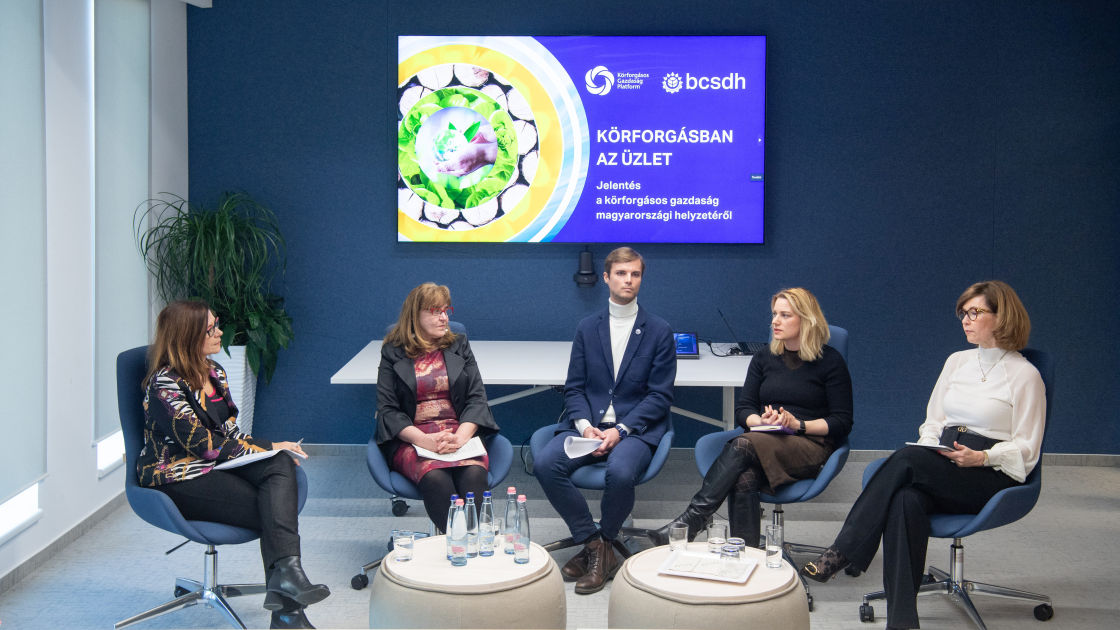
Presenting the research results, BCSDH director Irén Márta highlighted at the event that "we launched the Circular Economy Platform nearly ten years ago with the aim of promoting the circular transition in Hungary through cross-sector cooperation and the exploitation of synergies. It is an important achievement that 75% of leading companies already have circular economy goals and 49% measure their circular economy performance." She added that companies are beginning to recognize that this is a complex business tool that can simultaneously contribute to cost efficiency, improve security of supply, create new business models and achieve targets of decarbonization.
At the same time, she also pointed out that only 21% of companies have a circular economy strategy. According to Irén Márta, accelerating the transition to a circular economy is only possible through knowledge sharing, showcasing good examples, presenting opportunities and the latest innovations, and, above all, through cooperation. The forum for this will be the European Circular Economy HOTSPOT, organized by BCSDH in Budapest between October 5 and 7, which will offer international and domestic knowledge and practical inspiration to the business sector.
A BCSDH survey says that 48% of companies are most motivated by resource efficiency in their transition to a circular economy. Other factors, such as the development of product and technological capabilities, the profitability of the circular economy business model, the reduction of exposure and risks, and the reduction of GHG emissions, are also considered important, but their direct impact is not yet perceived as significant enough to establish a clear order of priority.
"According to the results, 59% of companies have goals in the area of waste management and 49% in the area of sustainable procurement and use of renewable resources," Julianna Nagy, director at KPMG, said. She believes that large companies and SMEs think similarly in this regard. Goals related to more complex circular activities are currently taking a back seat.


Top 5 Articles
 What Awaits the Hungarian Economy in 2026 and 2027? April 24, 2026
 - Consolidating the Good Bilateral Relations May 10, 2026
- Two Vantage Points, One Direction August 22, 2026
- Business, Consumer Confidence at Two-Year High in April April 23, 2026
- Building Bridges in a Changing World March 26, 2026