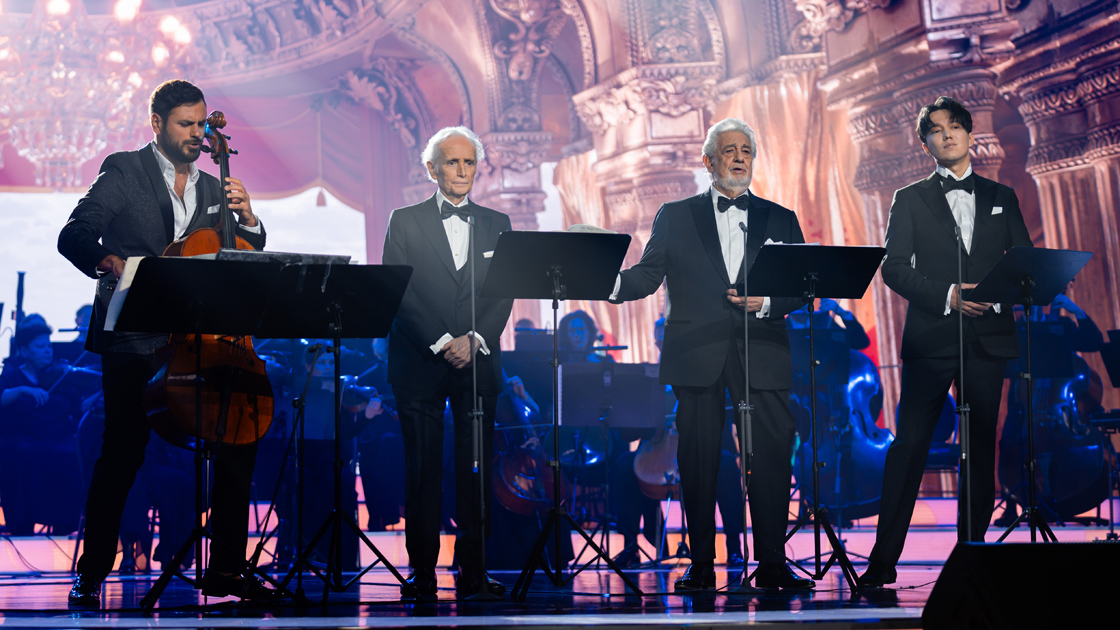

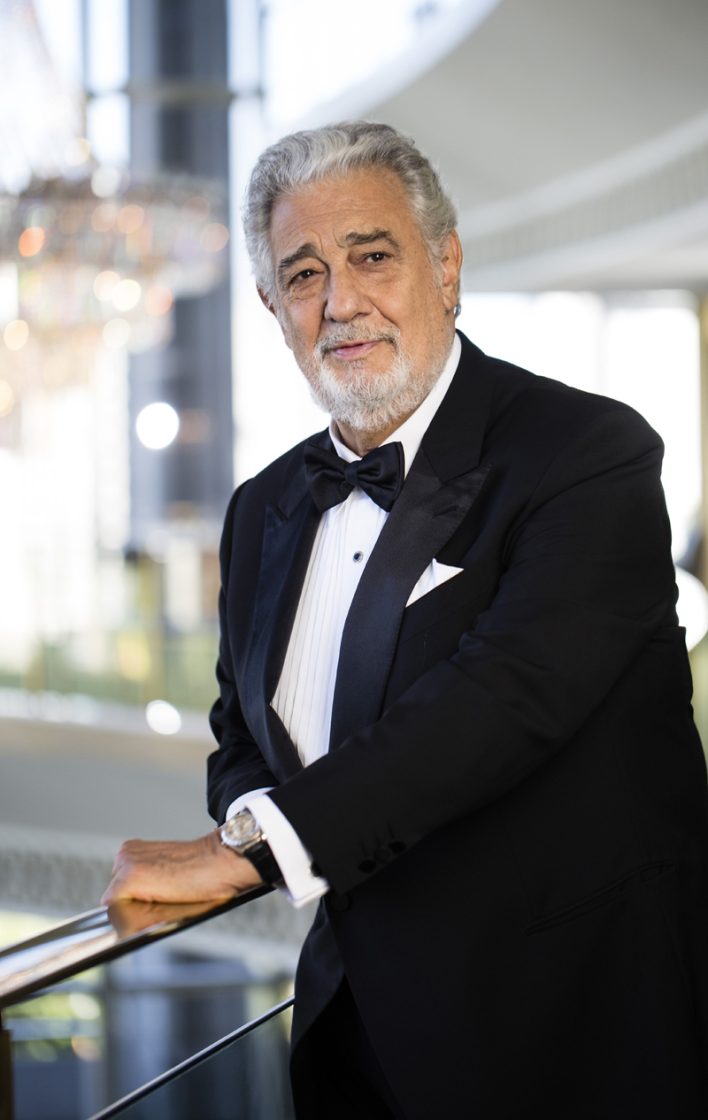
World-renowned opera singer Plácido Domingo has been enchanting music lovers around the world with his distinctive and emotive voice for more than 60 years. Recognized as one of the finest and most influential singing actors in the history of opera, the multifaceted artist is also a conductor and a major force as an opera administrator. His repertoire now encompasses more than 150 roles, with over 4,000 career performances. In line with his motto of "I rest, I rust,” the Maestro is still extremely active in his 86th year of age.
Speaking of his versatility and musical diversity, are these attributable to conscious pursuit or is it something that naturally stems from his talent? As he explains to Diplomacy&Trade, “the truth is that music has always fascinated me, since I was a child. I saw my parents who were singers of zarzuela – a Spanish lyric-dramatic genre that alternates between spoken and sung scenes, the latter incorporating operatic and popular songs, as well as dance – and I admired their work so much. Every aspect of theater has always fascinated me and I started working in theater at a very young age. This is why I studied the piano from an early age.” He dreamed of becoming an orchestra conductor, but in the meantime, his mother discovered that he had an interesting voice and so many different paths opened up in front of him. “I tried to carry these forward together. This has helped me a lot in my career and personally; it is very nice to have a complete view of the work you are doing,” he adds.
Expressing the composer’s idea
Plácido Domingo has sung in more than 150 different roles, bringing a wide range of characters to life on stage. As to how he steps into the personality of a fictional figure or a historical character, he stresses that “as I said before, it's nice to use a 360-degree approach: knowing the ‘libretto’, but also the story from which an opera is born and then entering into the music and understanding the relationships that this character has with others. Getting in tune with the character means trying to understand what the composer wanted to express with that music and those words. I think that the goal of an interpreter is precisely this: to respect the composer's will.”
Triple debut
When asked which performance has been the most exciting for him so far and why, the Maestro admits it is a very difficult question to answer. “Every performance is something unique. Everything happens live, in front of the audience and I always try to give the best of myself to the public. Of course, I remember incredible performances, especially my debut at the Metropolitan Opera in New York City next to Renata Tebaldi or at La Scala Theater in Milan directly at the premiere of Sant'Amborgio, which is a unique event for a singer… and the most unusual, the one that marked my debut at the Arena di Verona in the summer of 1969. On that night, they were three debuts in one: I made my debut in Italy, I made my debut in Turandot and I sang for the first time with Birgit Nilsson… and in those hours, man set foot on the Moon! In short: a triple somersault… but it went well!”
Always like the first time
Describing his feelings at the moment he steps onto the stage and the lights come on, the Spanish-Mexican artist recalls three things: “adrenaline, anxiety, emotion… always! This never changes, even after more than half a century. Every time it's like the first time, every night you have to give everything you can and you're worried about that before you start. Then the music begins and something special happens… and stress becomes energy.”
Verdi and Shakespeare together
Plácido Domingo is considered the most famous Otello in the contemporary operatic world. He says it is actually one of his favorite roles. “It has given me so much. Verdi and Shakespeare together! You can't wish for anything greater. But it's also tremendously challenging. Otello is not a positive hero, you have to enter his sick mind to try to bring out all his humanity, his anguish, his extreme fragility. Another exceptional role is Macbeth… and once again, it is the Verdi-Shakespeare duo!”
The magic of opera
When comparing what can opera offer young people today that pop music genres cannot, the Maestro highlights his belief that “music must be able to make us dream, make us empathize, sometimes suffer and sometimes feel better… – in one word: music must give us emotions. Opera can do this in an overwhelming way, even for a young boy. Indeed, especially for young people. The opera has music, singing, scene, ballet, costumes and, above all, it is live and always new. We must give young people the right opportunities to come to the theater… the magic of opera can fascinate young people.”
Profound musical sensitivity
Hungary holds a prominent position on the international classical music scene. As to what extent he himself experiences that and feels it to be true, Plácido Domingo’s remark is: “very much so. Hungary has given the world extraordinary composers, conductors, instrumentalists, and singers. There is a deep musical culture here – a respect for tradition combined with strong artistic education. Through my experiences with Hungarian artists and through initiatives like the classical music talent show ‘Virtuosos’, I see the exceptional level of talent and dedication among young musicians here. It is not only about technical skills, there is a profound musical sensitivity that comes from cultural heritage. I am always happy to witness this tradition continuing with new, brilliant young artists,” he concludes.


Top 5 Articles
 What Awaits the Hungarian Economy in 2026 and 2027? April 24, 2026
 - Cherishing Italian Cultural Presence in Hungary September 3, 2026
- Consolidating the Good Bilateral Relations May 10, 2026
- Indotek Group Acquires 100% of Auchan Magyarország June 26, 2026
- Two Vantage Points, One Direction August 22, 2026