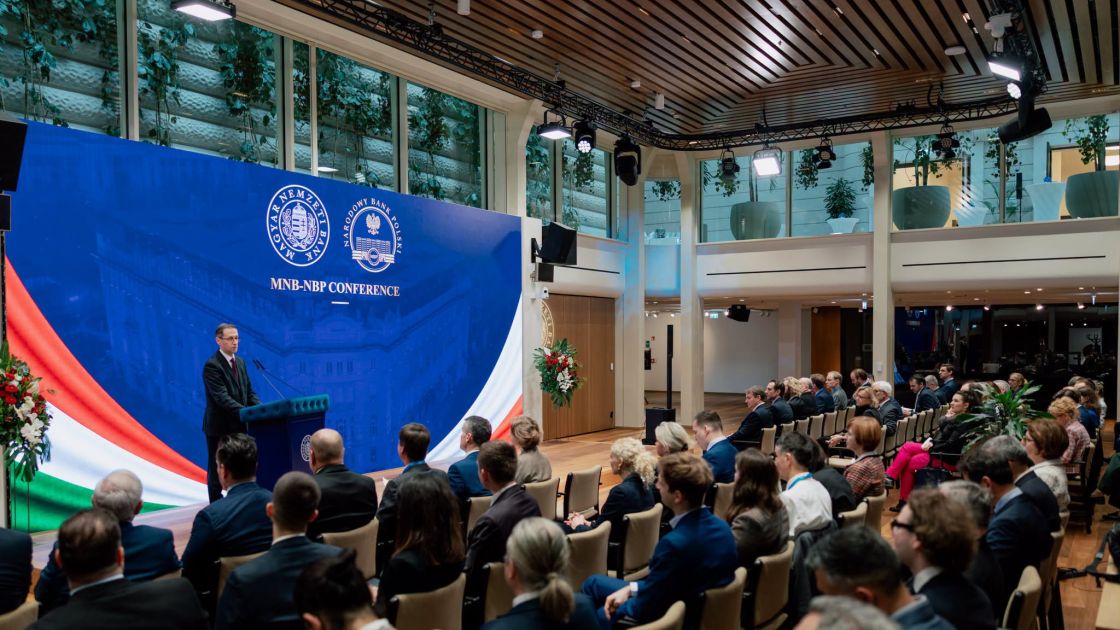

Due to the transformation of the global economy, Central and Eastern Europe needs central bank cooperation that supports mutual economic convergence, National Bank of Hungary (MNB) governor Mihály Varga said at a joint conference by MNB and the Polish central bank.
The MNB governor emphasized that maintaining the region's competitiveness requires increasing productivity, strengthening innovation and prioritizing economic activities with higher added value.
While the European economy is facing fundamental challenges, Central Europe is particularly hard hit by the transformation of energy supply relations and the fragmentation of the international economy as its growth in recent decades has relied heavily on foreign direct investment and technology transfer, he said.
He pointed out that the economic convergence of the region stands as a significant success story of recent decades. However, the slowdown in foreign direct capital inflows and rising labour costs requires a renewal of the previous growth model, Varga said. In the coming period, the foundation for sustainable convergence could lie in strengthening the competitive domestic corporate sector and supporting education, research and development and technological innovation, he said. The rise of artificial intelligence, demographic shifts and the energy transition all demand new adaptive capabilities.
Central banks play a key role in ensuring the conditions for economic adjustment, he said. Maintaining price stability and identifying economic risks in a timely manner can create a predictable environment for investment and innovation. Amid sustained geopolitical uncertainty and inflationary pressure, the fulfilment of central banks' core mandates has become more important than ever, he highlighted.


Top 5 Articles
 Cherishing Italian Cultural Presence in Hungary September 3, 2026
- Indotek Group Acquires 100% of Auchan Magyarország June 26, 2026
- Two Vantage Points, One Direction August 22, 2026
- Ágnes Forsthoffer, Interim Hungarian President July 20, 2026
- Sziget Must 'Move Forward to Break Free' August 16, 2026