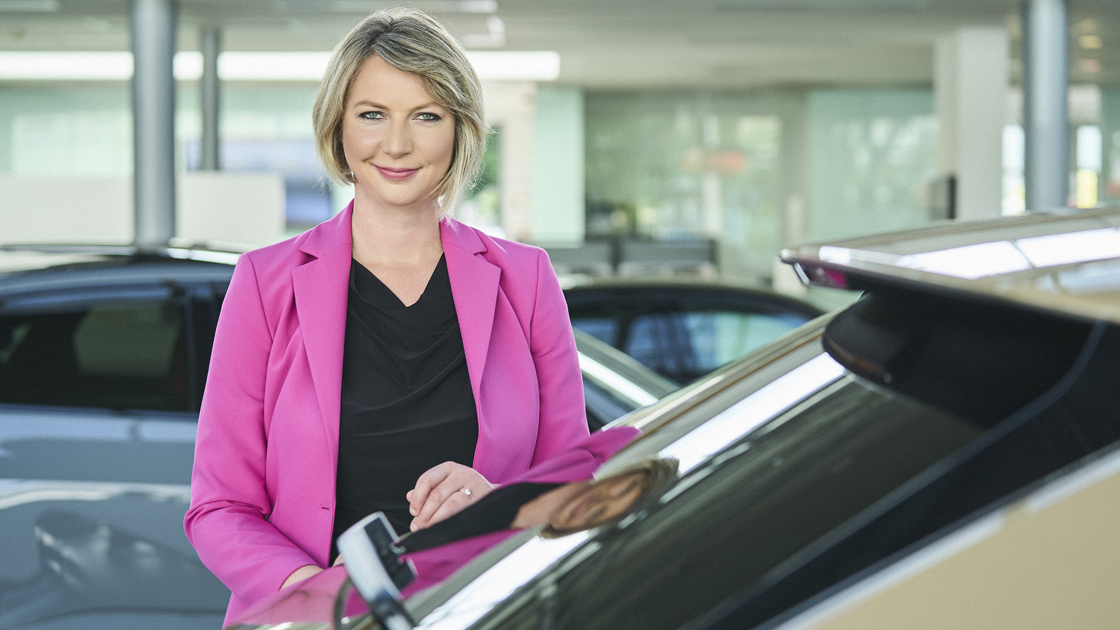

The automotive industry is undergoing one of the most significant transformations in its history. Electrification, digitalization, changing customer expectations and new approaches to sustainability are reshaping the mobility landscape, while manufacturers and importers are required to adapt with increasing speed. For Porsche Hungaria, this transformation is not simply a technological challenge but an opportunity to redefine its role in the Hungarian market.
In an interview with Diplomacy&Trade, Porsche Hungaria Managing Director Brigitte Auernigg outlined how the company is responding to these changes, from the evolution of its mission and customer relationships to investment in people, education, sustainability and operational excellence.
From importer to mobility partner
Porsche Hungaria’s role has evolved considerably since its establishment. According to Auernigg, the company can no longer be defined simply by the traditional responsibilities of an automotive importer. Its long-term objective is to create value across a much broader mobility ecosystem, combining the strength of its brands and dealer network with increasingly sophisticated services and digital solutions.
This transformation also reflects a fundamental change in the automotive industry itself. The traditional model centered on the sale of a vehicle is gradually giving way to a more comprehensive customer relationship in which digital services, aftersales, connectivity and the overall ownership experience play an increasingly important role.
For Porsche Hungaria, maintaining a strong market position therefore depends not only on the products it represents, but also on how effectively it connects the different elements of the customer journey.
Digitalization and the transformation of the customer journey
Digitalization is among the most important forces influencing the Hungarian automotive market. Customers increasingly expect greater transparency, speed and convenience, while digital tools are becoming an integral part of how they research, compare and purchase vehicles.
Auernigg sees this as a fundamental transformation rather than a simple technological upgrade. Digitalization affects internal processes as well as the relationship between customers, dealers and the importer. The challenge is to create a seamless experience in which digital and physical interactions complement one another.
At the same time, technological development must remain closely connected to customer needs. Digital solutions are valuable when they simplify processes, improve accessibility and create a more personalized experience rather than merely adding another layer of technology.
Understanding the new customer
Customer expectations are changing alongside the market. Buyers are becoming more informed and increasingly accustomed to fast, personalized and transparent services in other areas of their lives. This naturally raises expectations within the automotive sector as well.
For Porsche Hungaria, responding to these expectations requires a deeper understanding of the complete customer journey. Product quality remains essential, but it is increasingly accompanied by expectations concerning service, communication, convenience and aftersales support.
The company therefore places growing emphasis on customer experience and loyalty. In a market characterized by increasing choice and rapid technological change, maintaining a long-term relationship with customers becomes just as important as attracting them in the first place.
A culture built on trust and continuous improvement
The transformation of the automotive industry also requires organizations to rethink how they work internally. Auernigg places considerable importance on corporate culture, with trust, responsibility and continuous improvement forming important elements of Porsche Hungaria’s management philosophy.
A rapidly changing environment requires employees to be able to adapt, learn and take responsibility. For this reason, organizational development cannot be separated from business development. The company’s ability to respond to market changes depends significantly on the knowledge, motivation and cooperation of its people.
This approach also extends to the relationship with the dealer network. Porsche Hungaria sees its dealers as important partners in delivering a consistent customer experience, making cooperation, communication and operational excellence central to its long-term strategy.
Investing in the next generation
Education and professional development represent another important part of Porsche Hungaria’s strategy. Through its Innovation & Training Center and Porsche Academy, the company seeks to strengthen the expertise of its employees and partners while preparing them for the changing requirements of the automotive sector.
The emphasis goes beyond technical knowledge. As the industry becomes increasingly digital and customer-focused, professionals need a broader combination of technological understanding, commercial awareness, communication skills and adaptability.
For Auernigg, investment in people is therefore closely connected to competitiveness. New technologies can transform products and processes, but sustainable performance ultimately depends on the people who implement and develop them.
Sustainability as a long-term responsibility
Environmental, social and governance considerations have also become an increasingly important part of the automotive business. Porsche Hungaria approaches ESG not as an isolated corporate initiative, but as an element of long-term value creation.
The transition towards electrification is one visible aspect of this development, but the broader transformation also affects operations, processes, employee development and relationships with business partners.
The challenge is to combine environmental responsibility with the practical realities of the market. This requires companies to remain flexible while continuing to invest in technologies, infrastructure and organizational capabilities that support a more sustainable mobility system.
Competing in a changing European market
The competitive environment is becoming more complex as established automotive manufacturers face new competitors, new technologies and changing market dynamics. Hungary’s position within Central Europe makes this particularly relevant for Porsche Hungaria.
Auernigg emphasizes the importance of remaining competitive through operational efficiency, strong brands, an effective dealer network and the ability to respond quickly to market developments. At the same time, the company benefits from being part of a larger international group, providing access to international expertise, processes and experience.
Maintaining competitiveness therefore depends on combining global knowledge with a detailed understanding of the Hungarian market and its customer.
Defining success for the next decade
Looking ahead, success for Porsche Hungaria will increasingly be measured by more than sales volumes or market share. The company’s ability to adapt to structural changes in mobility, maintain customer trust, develop its people and strengthen cooperation across its network will be equally important.
Auernigg’s vision places long-term resilience at the center of this process. Porsche Hungaria needs to remain sufficiently agile to respond to technological and market changes while preserving the qualities that have established its position in Hungary.
The coming decade will therefore be defined by transformation. For Porsche Hungaria, the objective is not simply to follow that transformation, but to actively shape its role within the future of mobility in Hungary.


Top 5 Articles
 Cherishing Italian Cultural Presence in Hungary September 3, 2026
- Indotek Group Acquires 100% of Auchan Magyarország June 26, 2026
- Ágnes Forsthoffer, Interim Hungarian President July 20, 2026
- Two Vantage Points, One Direction August 22, 2026
- Sziget Must 'Move Forward to Break Free' August 16, 2026