
Korean culture once again took center stage on Margaret Island on the Danube in Budapest, where the Kristály Színtér venue hosted this year's KoreaON festival. The two-day free event attracted huge interest again this year, with more than 10,000 visitors coming to take part in the celebration of Korean cuisine, music, dance and crafts.
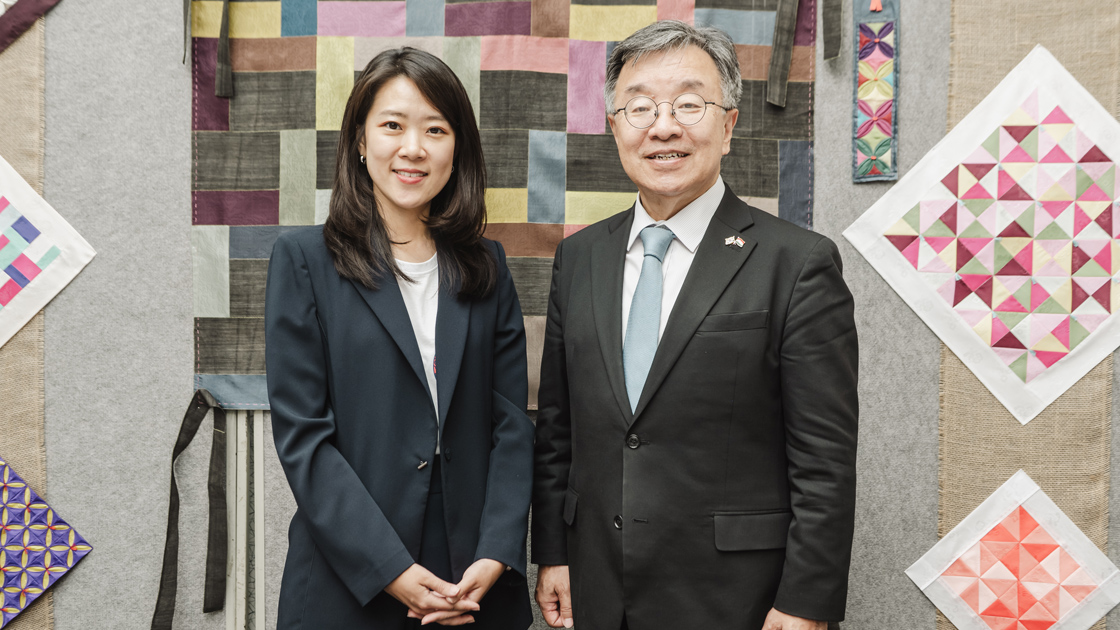
The aim of KoreaON festival remains unchanged year after year: to showcase the diversity of Korean culture and build bridges between the two countries through culture. Following the opening ceremony of the 2025 event, the Ambassador of the Republic of Korea to Hungary, Kyu Dok Hong highlighted to Diplomacy&Trade that the performing artists had come again with a wide variety of programs to promote relations between the Hungarian and Korean people through culture. “As you could see at the opening ceremony, people wearing masks danced in groups, participated in group singing and there are many different places here where, for example, enthusiasts can taste Korean gastronomic delicacies and gain a lot of different special experiences related to Korean culture.”
A feeling of life
Versatility and tradition were two key subjects addressed at the festival. “Traditional culture is still present in Korea, and as you saw at the opening ceremony, the performers presented this traditional culture through both dance and a very powerful sound. It is possible that this was a little too powerful for Hungarian ears, but it allows us to feel the energy and unity more strongly, and also to see how, through these dance and singing performances, young and old, men and women can come together and perform these very energetic programs together, just like the dance group that performed at the opening ceremony,” he added.
The Ambassador noted in this regard that he was last year at the traditional Hungarian folklore event ‘Csángó Festival’ and saw a similar performance there, where men and women, the elderly and the young, were dancing and singing together, "it was good to see this feeling of life that Hungarians and Koreans can also experience together.”
Sharing common culture
The Korean Embassy in Budapest is one of the organizers of the KoreaON festival – together with the Korean Cultural Center – as they would like to share the common culture of Hungarians and Koreans with the audience, promoting communication between the two countries and the two peoples. “Of course, we cover the costs of the Korean artists coming here so that they can participate in the event: for example, with financial allowances, arranging airline tickets, etc.,” he added.
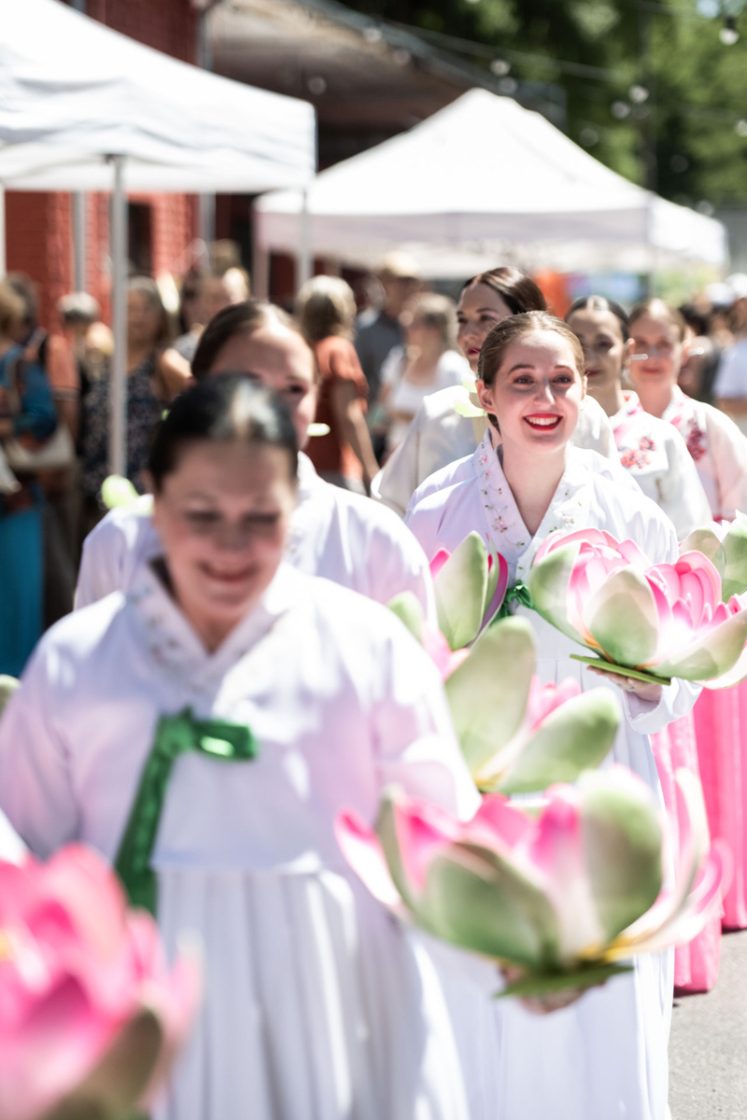
The one in 2025 was not the first KoreaON festival Ambassador Hong attended here in Hungary. Giving his impression of the event, he pointed out that “I was very surprised that so many people are interested in Korean culture, and I was also very surprised that these Hungarians who performed wore hanbok, the traditional clothing of the Korean people. One might think that these Hungarians got these clothes from the Korean Cultural Center, but no, these people bought those themselves, they are so interested in the culture.”
Another thing that surprised him was that there are more than 200 groups here in Hungary who are learning to play the traditional Korean lute or perform traditional Korean dance, as one could see many Hungarians participating in the opening ceremony.
“As you saw, these people had no difficulty at all in performing; they learned these traditional steps very easily.” This is another point for which he is very grateful to the Hungarian people who love Korean culture so much, not to speak of the fact that “while in several countries, Korean boy and girl bands are preferred by the younger generation, here in Hungary, our culture appeals not only to the younger generation, but even more so to those in their 50s and 60s.”
Korean Cultural Center, the main organizer
As the Ambassador mentioned, the Korean Cultural Center has a key role in organizing the KoreaON festival year after year. The Center’s director, Hye Ryong Yu explained to Diplomacy&Trade that “we are planning the whole program from choosing the venue and inviting the artist from Korea, collaborating this year with the Hanyou Hungarian-Korean Cultural and Arts Foundation, a nonprofit organization that has been representing groups enthusiastic about Korean culture in Hungary since 2016. Together, we planned the programs in detail and decided about the scope of the participants. So, I would like to emphasize that this event was made possible not only because the Korean Cultural Center did a great job, but also thanks to the support from Hungarian people who like Korean culture.”
Traditional and modern Korean culture
As to what aspects of the Korean culture were emphasized at the festival this year, she underlined that they wanted to show a huge scope of Korean culture from traditional Korean culture to the modern one. “For example, experiencing Korean traditional art, dance performance and booths presenting handcraft culture, you can find the beauty of art. We also have a gastronomy section where you can experience authentic Korean food, which has a long history, but which is still very common in Korean daily life. With hip hop singing and dancing, you can enjoy the energy and the lively vibe. So, if I have to say that in one word, that would be harmony between traditions and modernity.”
A culinary specialty
Regarding Korean flavors Hungarian visitors were to sample at the festival, the Director remined that “last December, the Korean fermented food, jang, which is listed as a UNESCO intangible cultural heritage, was presented in Hungary that also has popular fermented food like kovászos uborka, that is leavened cucumber. In Korea, we are just using the bacteria and the food changes naturally. So, the philosophy behind the jang is the harmony between humans and nature. This year, we prepared the gastronomy section of making jang and also kimchi by Korean chef. We really hope that the Hungarian audience could also feel this philosophy. The jang can be a dish in itself, but it's also a very essential ingredient to many other Korean dishes.”
Opportunity for mutual understanding
Feedback by the audience is always essential at events such as the KoreaON festival. As regard the approach of Hungarians to Korean culture, the Director’s experience is that “these days, Korean culture is very popular globally, but what makes it very special in Hungary is the wide age spectrum of the people who consume Korean culture. There are young people, but also the elderly people, who enjoy this culture in which they show a variety of interests. They are not only interested in K-pop and K-movie, but in traditional and contemporary art as well. That is very meaningful for us and I think Hungarian people are very open minded. Looking back at last year’s event, we had more than 15,000 Hungarians attending Korean cultural festival then. They were not just an audience, they actively participated in each type of event – for which we are very grateful. This kind of cultural event is very important in terms of offering an opportunity for mutual understanding. But what makes it the most important thing is that people come here to enjoy and entertain themselves as the KoreaON festival brings joy and connection to the people who attend it.”


Top 5 Articles
 What Awaits the Hungarian Economy in 2026 and 2027? April 24, 2026
 - Cherishing Italian Cultural Presence in Hungary September 3, 2026
- Consolidating the Good Bilateral Relations May 10, 2026
- Indotek Group Acquires 100% of Auchan Magyarország June 26, 2026
- Two Vantage Points, One Direction August 22, 2026