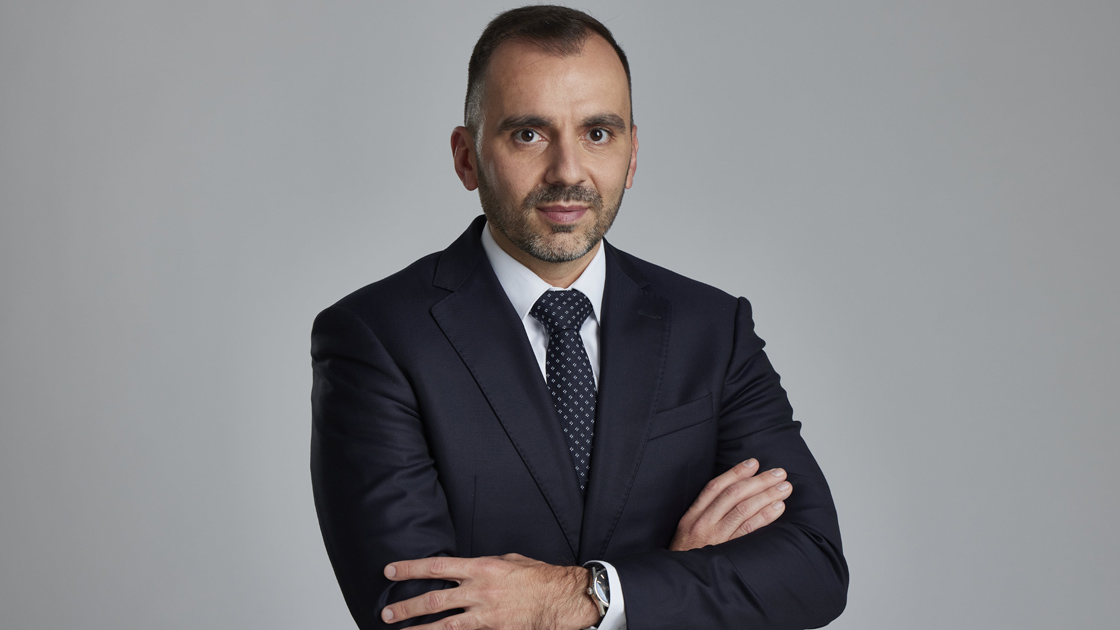

“Germany has traditionally been the largest investor in Hungary. Approximately 2,400 German companies employ around 235,000 people here. This number has increased by 55% since 2010, that is, one in every 14 employees in the Hungarian corporate sector now works for a German company,” government commissioner and CEO of the Hungarian Investment Promotion Agency (HIPA) István Joó highlights to Diplomacy&Trade, describing German economic presence in Hungary.
German companies have invested more than EUR 20 billion in Hungary in terms of the equity capital of their Hungarian subsidiaries (as of December 31, 2023). However, based on actual expenditures on tangible assets (machinery, equipment, buildings), the value of investments is several times higher.
Since its establishment in 2014, the Hungarian Investment Promotion Agency (HIPA) has been involved in 324 German projects until the first half of this year, with a total investment value of around EUR 18 billion. Last year, decisions were made on ten investment projects with German companies, making Germany the most active foreign investor community of the year in terms of the number of new projects.
Offering favorable business environment
Regarding HIPA's role in promoting German investment in Hungary, István Joó stresses that “we are in a favorable position because German companies are well aware of Hungary's strengths. They know that they will find perhaps the best business environment in Europe here. The highly competitive tax system, a well-trained workforce with a work culture similar to that in Germany, the country's favorable location and developed infrastructure all speak in our favor.”
He adds that HIPA's task is to encourage as many German companies as possible to take advantage of these opportunities and invest in Hungary. Therefore, together with foreign trade diplomats, the agency is proactively seeking new German companies whose activities and technologies can be easily integrated into domestic ecosystems in Hungary.
“We encourage German companies already operating here to expand their capacity and to locate activities that create the highest possible intellectual added value in Hungary. This is supported by the continuous fine-tuning of the VIP cash subsidy system, based on individual government decisions, in which we have shifted the focus from job creation to higher value-added projects and are giving priority to encouraging research and development (R&D) and innovation,” the CEO points out.
Mercedes-Benz R&D project
The latest German-related news in Hungarian investment relations is the expansion of Harro Höfliger's investment in Debrecen, but a much larger project is the Mercedes-Benz research and development investment in Kecskemét, both announced this November.
István Joó underlines that Mercedes-Benz's latest investment in Kecskemét is particularly significant because it is the first time the company has launched an R&D project in Hungary. A prototype development center is being set up in Kecskemét, which means that this town will not only be a production base in the company's global network, but also a location for strategic innovation.
“There was fierce competition within the company to win the project, and Kecskemét's success is a significant recognition of Hungarian engineering expertise. The EUR 54.4 million investment is being made with the support of HIPA and will contribute to raising the technological level of the domestic automotive industry in the long term, as it will not only create 25 R&D jobs, but also allow engineering students to participate in the work in cooperation with the company and Neumann János University, and experience what innovation means in practice,” he says.
The government is supporting the investment with EUR 10.9 million through HIPA. The center will focus on optimizing the production of new models, striving to identify manufacturing imperfections at an early stage, and applying the solutions developed in Kecskemét to the production of electric cars based on new platforms.
German firms counting on Hungary
The automotive industry is currently showing signs of crisis. The HIPA CEO acknowledges that it is indeed undergoing a major transformation globally. The transition to electromobility and market uncertainties are putting serious pressure on manufacturers, including German ones. However, he is of the view that all this represents an opportunity rather than a threat for Hungary, and in recent years as the largest German players in the sector relocated their strategic activities to Hungary one after the other.
“Today, we can say that all three major German premium brands – Audi, which arrived in 1993; Mercedes-Benz, which has been manufacturing in Kecskemét since 2012; and BMW, with its plant in Debrecen that opened this fall – have significant capacity in Hungary, including in the production of electric cars. BMW has built its most modern plant in Debrecen, where it is producing the first model in the Neue Klasse series, which marks a new era in the company's history, while Mercedes-Benz is creating Hungary's largest car manufacturing base in Kecskemét with a capacity expansion investment, which includes the construction of a battery assembly plant. These are all investments made with the help of HIPA, so we see every day that German companies are counting on Hungary for the long term and are constantly strengthening their presence here, even in an uncertain global environment,” he explains.
Competitive investment location
This fall, important German investments were in the news, such as the expansion of Siemens Mobility's R&D center in Budapest, Rheinmetall building a development center in Zalaegerszeg and the already mentioned handover of BMW's plant in Debrecen. As to what brings new projects here, István Joó points to surveys conducted by the German-Hungarian Chamber of Industry and Commerce that are “very helpful in mapping the prevailing opinions among German investors. Since 1997, this series of surveys has asked whether they would choose Hungary again as an investment location. Looking at the average over almost 30 years, 79% of respondents answered yes. This means that the vast majority of German investors are satisfied with our country and continue to view Hungary as a competitive investment location.“
German investors are particularly satisfied with the infrastructure, which exceeds the regional average, but they also traditionally rate labor regulations, employee skills, the vocational training system, and the quality of Hungarian suppliers as good.
Environment-friendly technologies
Nowadays, sustainability is an important element of any serious investment, serving not only to protect the environment but also to reduce costs. The HIPA CEO stresses that this is also characteristic of German investments. The Audi plant in Győr, for example, operates one of Europe's largest rooftop solar parks, which clearly shows that German companies are not only following but also shaping the green transition in Hungary. HIPA supports this process through its investment promotion tools, with sustainability being a key consideration in the development of support agreements.
“At the same time, our experience shows that German companies not only meet sustainability expectations, but often test and introduce technological innovations here that later become standard in their global production network. This is demonstrated by BMW's investment in Debrecen, which follows the so-called iFactory concept that combines Industry 4.0 and sustainability, implementing energy-efficient, data-driven, flexible manufacturing that significantly reduces environmental impact.”


Top 5 Articles
 What Awaits the Hungarian Economy in 2026 and 2027? April 24, 2026
 - Consolidating the Good Bilateral Relations May 10, 2026
- Two Vantage Points, One Direction August 22, 2026
- Business, Consumer Confidence at Two-Year High in April April 23, 2026
- Building Bridges in a Changing World March 26, 2026