
There are countries one comes to know through professional duty, and there are others that enter one’s life quietly, long before titles, responsibilities or ambitions take shape. Hungary belongs to the latter category for me. It did not present itself as a destination of immediate consequence; rather, it revealed itself gradually, patiently, through moments that accumulated meaning over time. What began as a youthful encounter evolved into education, then into service and family life, and ultimately into a renewed sense of responsibility. Hungary did not simply accompany my journey – it became part of its formation.
My first encounter with Hungary took place in the summer of 1998. I arrived as a boy, not yet eighteen, traveling with my parents through Budapest, Lake Balaton and cities whose names would later become enduring points in my personal geography – Szombathely, Veszprém and Sopron, to name a few. Hungarian cities at that moment carried the unmistakable atmosphere of transition. Their streets reflected both historical continuity and forward-looking ambition; their buildings bore the dignity of centuries, while their people moved forward with quiet determination. It was a country rediscovering itself through openness, private initiative, and confidence in a freer future.
I was coming from a land standing on the threshold of war. Against that backdrop, Hungary offered something profoundly human: stability, order and the reassurance of everyday life continuing. It became the place where together with my parents, we reunited with part of our family living in Western Europe, and through that reunion, Hungary acquired emotional depth. It was no longer simply a country visited, but a space associated with safety and connection. What remains most vivid are not only monuments or landmarks, but gestures – unassuming kindness in cafés, modesty in small shops, and brief conversations in public spaces marked by calm courtesy and mutual respect. Without fully realizing it at the time, I began to feel at home.
Where ideas took root: the academic years
Years later, Hungary welcomed me again – this time as a student. Between 2005 and 2007, I returned to pursue a Master’s degree in International Relations through Corvinus University Budapest and the Institute for Social and European Studies in Kőszeg, in cooperation with Savaria University in Szombathely. This period proved formative as it gave structure to curiosity and depth to professional orientation. The academic environment was demanding yet generous, shaped by scholars whose intellectual authority was matched by moral clarity and international relevance: Tamás Szentes, Ferenc Miszlivetz, Jody Jensen, Elemér Hankiss, Zoltán Pogátsa, Philippe Schmitter, Attila Pók, Tibor Palánkai, Attila Eralp, James M. Skelly among others.
Yet the richness of that experience extended beyond lectures and libraries. Students arrived from across continents – from North America to East Asia, from Eastern Europe to the Western Balkans – bringing with them diverse histories, convictions and aspirations. Exchange flourished not only in classrooms, but in shared spaces and long conversations. Kőszeg itself – quiet, dignified and embraced by unspoiled nature – offered a rare setting for reflection. Removed from the urgency of capitals, it allowed ideas to take root, friendships to form and a worldview to mature. Hungary became a place where thinking was encouraged not merely as an academic exercise, but as preparation for responsibility.
Service and family: the personal anchoring of home
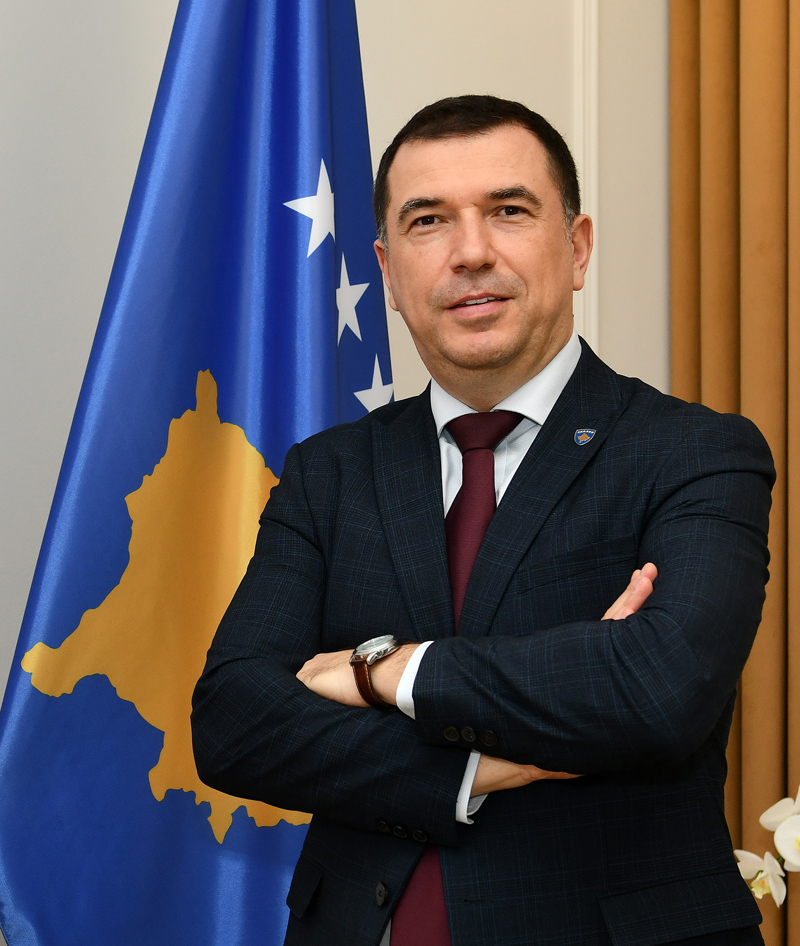
My third return to Hungary marked a decisive turning point. In January 2010, I came back not as a visitor or student, but as a diplomat – among the first representatives of the Republic of Kosovo. Together with the then Ambassador, I was entrusted with the task of establishing Kosovo’s first diplomatic mission in Hungary. For Kosovo, this represented an important step in diplomatic consolidation; for me, it was the privilege of serving my country in a place that had already become deeply familiar.
Diplomacy, however, rarely unfolds only in official settings. Life continued alongside duty, and Hungary became the setting for defining family moments. My wife, Mimoza, and I welcomed our son, Rron, in 2010, and our daughter, Dëbora, in 2013, both born in Budapest. These events anchored us profoundly. Few bonds are stronger than those formed in the places where one’s children are born. Hungary ceased to be merely a post of service; it became a second home, woven into our family’s earliest memories.
Professionally, the years between 2010 and 2014 were defined by patient dedication and careful construction. The Embassy worked systematically to advance bilateral relations through high-level visits, bilateral agreements, and initiatives in economic and public diplomacy. Progress was achieved through consistency rather than just ceremony, and during this period, Kosovo–Hungary relations entered a stable and promising phase, grounded in mutual respect and shared interests.
Return with Responsibility: ambassadorship, continuity, and the maturity of partnership
When I returned to Hungary in June 2024 as Ambassador Extraordinary and Plenipotentiary of the Republic of Kosovo to Hungary, it felt less like a new beginning than the continuation of an unfinished conversation. A decade had passed, yet Budapest greeted me with the same familiarity. The city had grown more confident, Hungary more developed, but its essential character remained unchanged – the warmth of its people, the quiet dignity of everyday life, and the openness that first captured my attention decades earlier.
Over the past fifteen years, relations between Kosovo and Hungary have matured into a partnership of substance. Hungary still stands as a friend and a supporter of Kosovo’s Euro-Atlantic aspirations, and as a contributor to peace and stability through its participation in NATO forces stationed in Kosovo. Economic cooperation has developed steadily, yielding tangible outcomes while offering further potential. I was privileged to witness Hungary’s Presidency of the European Union once again, as I had followed it closely in 2011, and to see Kosovo represented with dignity and equality within the Western Balkans framework.
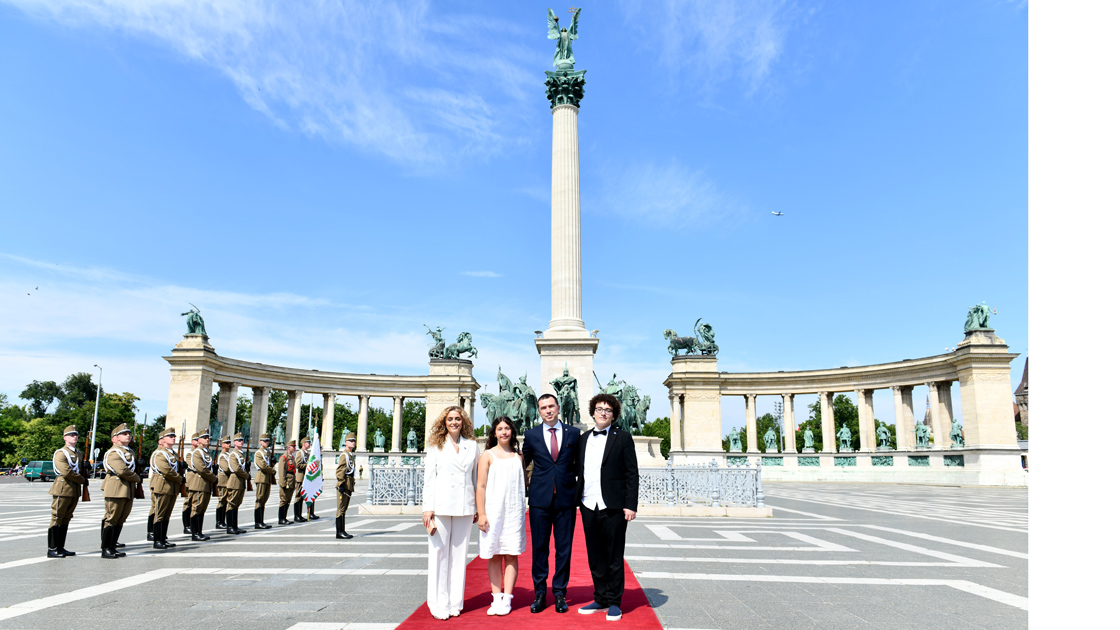
The official visit of President Vjosa Osmani Sadriu to Hungary on June 17 this year reaffirmed the depth of this relationship. Received with the highest state honors by President Tamás Sulyok, the visit reflected mutual respect and a shared commitment to addressing contemporary challenges, particularly through enhanced political dialogue and intensification of economic cooperation. President Sulyok’s reciprocal visit to Pristina on December 8, including his engagement with Hungarian troops stationed in Kosovo, further confirmed the continuity and sincerity of this partnership.
Looking back, Hungary is not simply a place where I currently serve; it is a country that has accompanied some of the key stages of my personal and professional life. It was present during uncertainty, learning, family formation, and diplomatic responsibility. In international relations, continuity is rare and trust is hard-earned. Hungary offered both.
This chapter is not merely a reflection on a bilateral relationship. It is, above all, a personal testament to how long-standing encounters between countries – and between people – can quietly and patiently shape a life. Through years of return and renewal, Hungary became intertwined with my own story, teaching me that partnership is not built only through agreements and visits, but through trust accumulated over time, shared moments, and a sense of belonging that grows almost unnoticed.


Top 5 Articles
 What Awaits the Hungarian Economy in 2026 and 2027? April 24, 2026
 - Consolidating the Good Bilateral Relations May 10, 2026
- Two Vantage Points, One Direction August 22, 2026
- Building Bridges in a Changing World March 26, 2026
- Business, Consumer Confidence at Two-Year High in April April 23, 2026