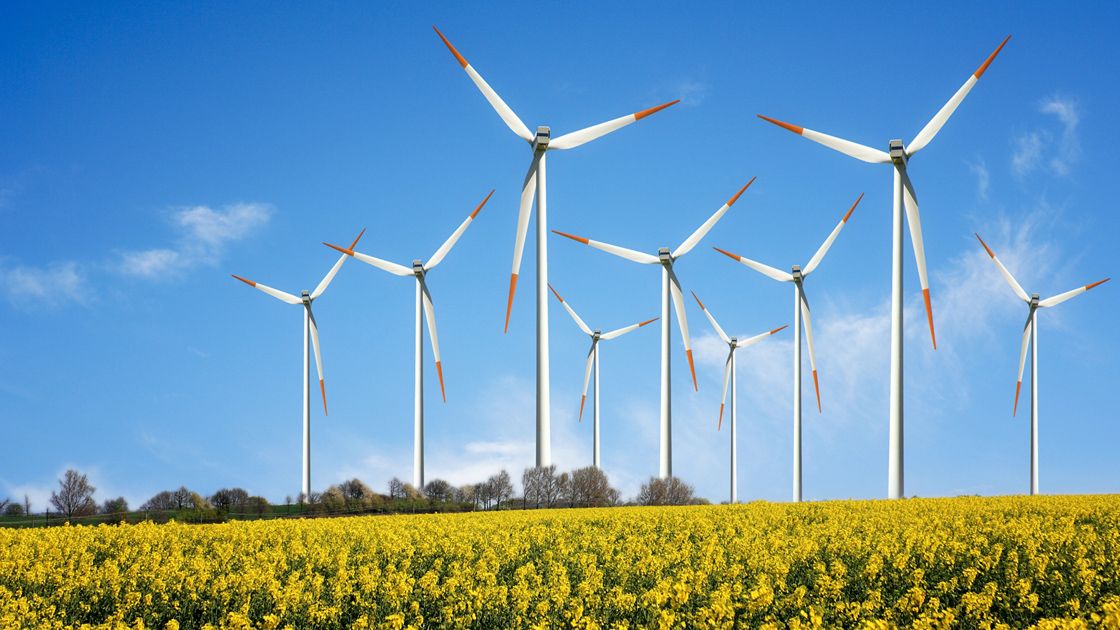

A comprehensive energy development plan was adopted at this week’s cabinet meeting, Prime Minister Péter Magyar announced Wednesday evening. As part of the plan, the first calls for proposals for wind power plants will be issued to investment companies on August 31. This marks a major shift following the previous government’s deliberate efforts to hinder the construction of wind farms in Hungary. From a technical and energy policy perspective, expanding wind energy appears to be a rational step.
The developments now announced by the government are planned to be implemented using domestic and EU funds, as well as private capital. “We are developing structures through which both the Hungarian state and the affected municipalities will benefit from these investments,” the prime minister said. Hungary’s electricity balance is dependent on imports: domestic production alone does not meet consumer demand. From this perspective, every new domestic generation capacity – whether nuclear, solar, or wind power – contributes to security of supply.
A distinctive feature of wind energy is that its generation profile differs significantly from that of solar power plants: it often generates electricity at different times of day and under different weather conditions, thereby effectively complementing the solar energy capacity that already plays a major role in the domestic energy mix; furthermore, the additional supply entering the grid could lead to lower prices in the medium term.
From a technical and energy policy perspective, expanding wind energy appears to be a rational step, Attila Keresztes, Chairman and CEO of Astrasun Solar, told the Hungarian economic portal Economx. He also pointed out that, despite this, public discourse on the topic consistently triggers intense social reactions that often go beyond a factual debate. Among the most frequently voiced objections are noise pollution and changes to the landscape.
The assessment of the impact on the landscape is fundamentally subjective – a matter of taste – for which there is no exact ‘correct’ answer. Noise pollution, on the other hand, is an objectively measurable parameter: “According to available measurement data, noise levels in the vicinity of a wind turbine are typically lower than those experienced by people living along a busy highway,” the expert stated.
A frequently raised argument is that the country is not suitable for operating wind turbines. However, according to domestic wind measurement data, several regions are exceptionally well-suited for this purpose. Furthermore, market mechanisms alone mitigate this risk: before any power plant is installed, a test tower is erected to measure local wind conditions for one year, and if the measurements do not confirm sufficient wind speed, the project simply does not go ahead – since the investor bears this risk themselves.
The argument that contrasts wind energy’s dependence on weather with the continuous availability of nuclear energy is partly true: wind does indeed not generate power evenly. At the same time, in a well-designed energy mix, sources with different generation profiles complement one another to ensure the stability of the system.
In summary, the expert added that expanding wind energy is justified from an energy policy perspective, and that a significant portion of the most frequently cited counterarguments – ranging from noise pollution to doubts about return on investment to the issue of consumer costs – can be factually refuted or, at the very least, strongly qualified.
The benefits and potential drawbacks of the technology must be presented to the public in manageable, digestible portions. As a first step, it is important to make it clear that the era of fossil fuels is over and that, for the sake of our energy security, we must electrify our transportation system. To do this, however, we need energy, which we can currently obtain most quickly and cheaply through wind energy projects.


Top 5 Articles
 Cherishing Italian Cultural Presence in Hungary September 3, 2026
 - Consolidating the Good Bilateral Relations May 10, 2026
- Indotek Group Acquires 100% of Auchan Magyarország June 26, 2026
- Two Vantage Points, One Direction August 22, 2026
- Ágnes Forsthoffer, Interim Hungarian President July 20, 2026