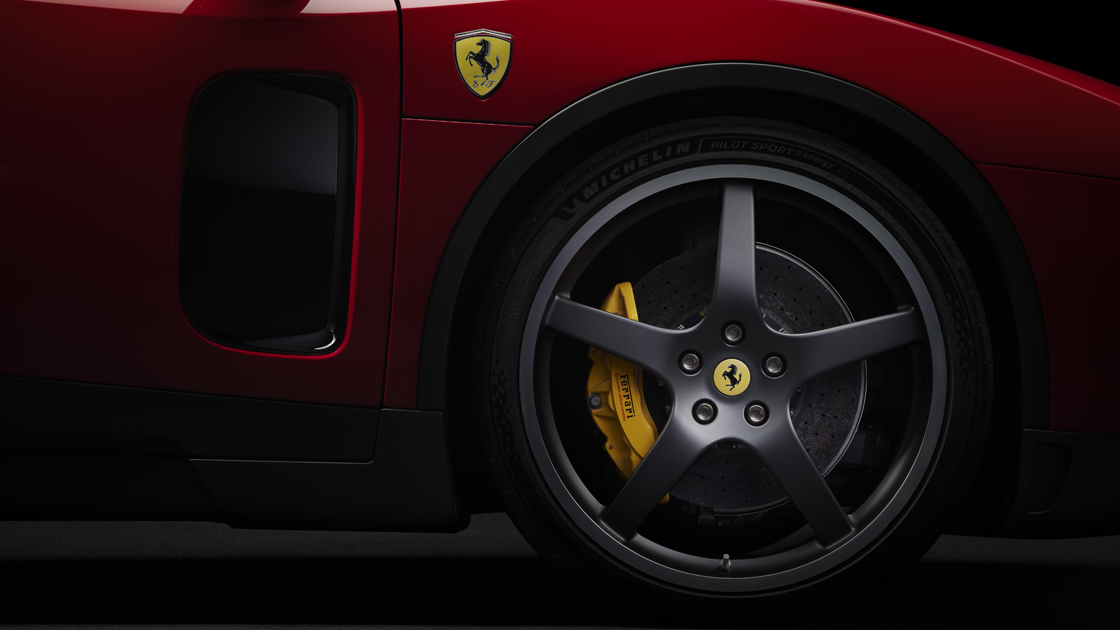

Ferrari’s first fully electric model combines a new design language with advanced engineering, five-seat versatility and the performance expected from the Prancing Horse.
With the unveiling of the Ferrari Luce, the Maranello-based manufacturer has opened a new chapter in its history. Powered by four electric motors and built on a dedicated platform, the model is more than an electric addition to the Ferrari range: it introduces a new vehicle architecture, a distinctive design language and an unprecedented level of interior space, while seeking to preserve the performance and emotional engagement associated with the brand.
Ferrari presented the Luce at the Vela di Calatrava – Città dello Sport complex in Rome, choosing a date of particular historical significance. On May 25, 1947, the Ferrari 125 S, driven by Franco Cortese, claimed the marque’s first victory at the Rome Grand Prix. Seventy-nine years later, Ferrari returned to the Italian capital to unveil a project intended to redefine what a car from Maranello can be.
A new design language
The Luce represents an important stage in Ferrari’s multi-powertrain strategy, based on the principle that electrification should expand rather than replace the company’s existing technological possibilities. Major components, including the electric motors and the 122-kWh battery pack, were designed, developed and manufactured in Maranello. The project incorporates more than 60 new patents.
Its design was created in collaboration with LoveFrom, the creative collective led by Sir Jony Ive and Marc Newson, working alongside the Ferrari Design team headed by Flavio Manzoni. The result is a unified visual language connecting the exterior, interior and digital interface.
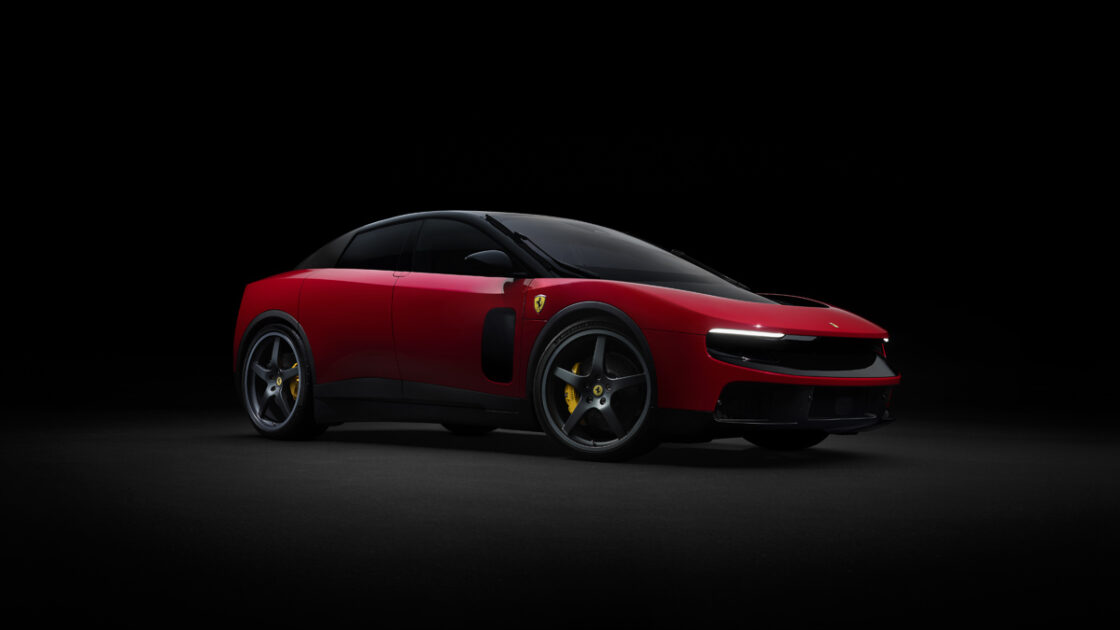
The car’s silhouette is defined by a clean, shell-like glasshouse framed by front and rear aerodynamic elements. Transparent lighting panels blend into the bodywork when switched off, while the circular rear lights establish a subtle connection with models such as the 360 Modena and the 458 Italia.
The electric architecture has also allowed Ferrari to reconsider the traditional layout of its road cars. The Luce is the first model in the company’s history to offer four doors and five full seats. The absence of a transmission tunnel and the integration of the battery beneath the floor and rear seats have created a considerably more spacious interior.
Performance and interaction
Inside, precisely engineered physical buttons, dials and switches are combined with digital displays developed with Samsung Display. The most important controls remain directly in front of the driver, reflecting Ferrari’s preference for tactile interaction even within an increasingly digital environment.
The four-motor system produces a combined maximum output of 1,050 horsepower. According to Ferrari, the Luce accelerates from zero to 100 kilometers per hour in under 2.5 seconds and reaches 200 kilometers per hour in 6.8 seconds. Its top speed exceeds 310 kilometers per hour, while its projected range is more than 530 kilometers. The 800-volt electrical system supports rapid charging at up to 350 kilowatts.
Each wheel can be controlled independently through the coordinated operation of propulsion, regenerative braking, active suspension and all-wheel steering. A new Vehicle Control Unit continuously integrates the powertrain and dynamic systems, helping the car respond as a single, fluid unit.
Ferrari has also developed an authentic acoustic system based on the actual vibrations of the electric drivetrain. Instead of imitating a combustion engine, the system captures, filters and amplifies the mechanical sound of the rotating components.
The Ferrari Luce represents a significant transformation for a marque traditionally associated with combustion engines. Yet its focus on in-house engineering, performance and driver involvement remains recognizably Ferrari. Electrification has been used not merely to introduce a new powertrain, but to rethink the entire automobile while preserving the identity of the Prancing Horse.


Top 5 Articles
 What Awaits the Hungarian Economy in 2026 and 2027? April 24, 2026
 - Consolidating the Good Bilateral Relations May 10, 2026
- Business, Consumer Confidence at Two-Year High in April April 23, 2026
- Long-Standing, Respectful Relations March 25, 2026
- Building Bridges in a Changing World March 26, 2026