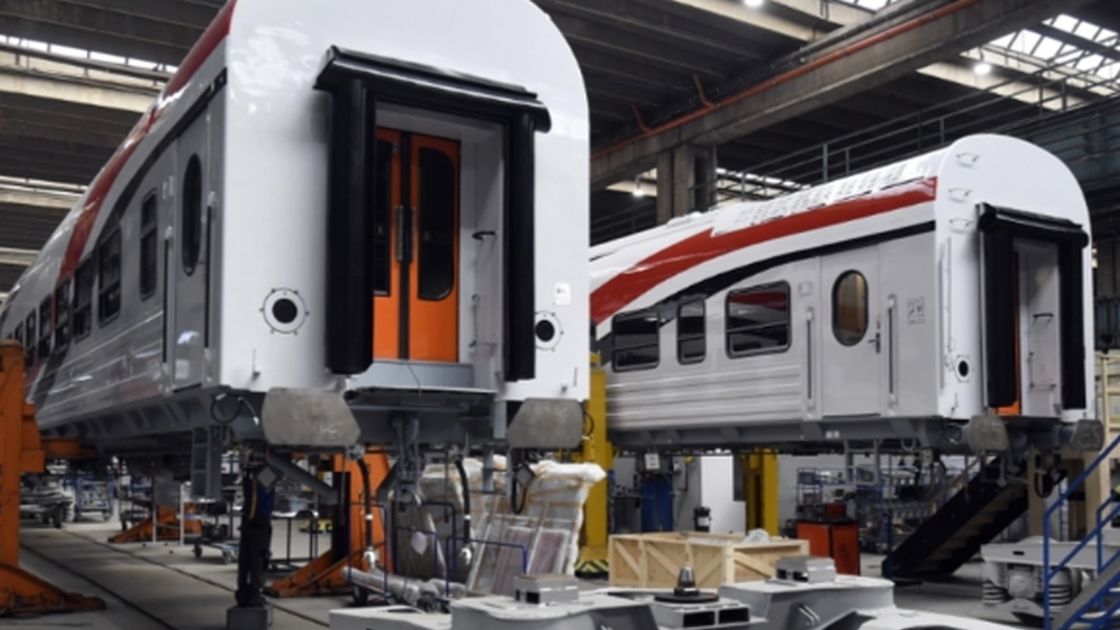

Hungarian rolling stock company Magyar Vagon (MVV) has won a tender called by the Leo Mobility Management (LMM) rail leasing company (ROSCO) to deliver 200 NEO modular passenger carriages, MVV said on Tuesday.
MVV will deliver the carriages over a period of about two years and LMM will lease these vehicles to European rail operators. The company did not disclose the value of the order.
According to the announcement, a key factor in selecting the winning bidder was that MVV is a European supplier with an entirely European industrial background. Other decisive factors included manufacturing flexibility, delivery reliability, manufacturing quality, and the final price, the announcement stated.
European service providers can access the vehicles through the TrainShop platform, where they can also configure the interior layout and financing options. For state-owned rail companies, the platform will also handle the public procurement process, the press release explained.
The interiors of the standardized passenger cars can be assembled from uniform modules according to the operator’s needs and the characteristics of the specific service. The cars will be manufactured with bogies and car bodies capable of speeds of up to 200 kilometers per hour.
The press release quotes László Ludvig, CEO of Magyar Vagon Railway Ltd., who stated that “over the past decade, we have supplied passenger cars to numerous operators around the world, and we know that user needs change faster than it takes for a rail car to reach the end of its service life.”
The design of the vehicle must adapt to this, and the NEO platform was built with this in mind from the very beginning, he noted.
David Šebestík, COO of LMM, emphasized in the press release that operators today need vehicles that allow them to respond as flexibly as possible to changes in demand.
“A train must always be tailored to the specific service; it must be easy to deploy and easy to finance,” he added.
According to publicly available company data, Magyar Magyar Vagon Railway Ltd.’s net sales revenue in 2025 was HUF 72.612 billion, compared to HUF 56.842 billion a year earlier. The majority of revenue came from domestic sales. The company’s net income after taxes was HUF 5,746 million last year, compared to HUF 5,036 million in 2024.


Top 5 Articles
 What Awaits the Hungarian Economy in 2026 and 2027? April 24, 2026
 - Consolidating the Good Bilateral Relations May 10, 2026
- Cherishing Italian Cultural Presence in Hungary September 3, 2026
- Two Vantage Points, One Direction August 22, 2026
- Business, Consumer Confidence at Two-Year High in April April 23, 2026