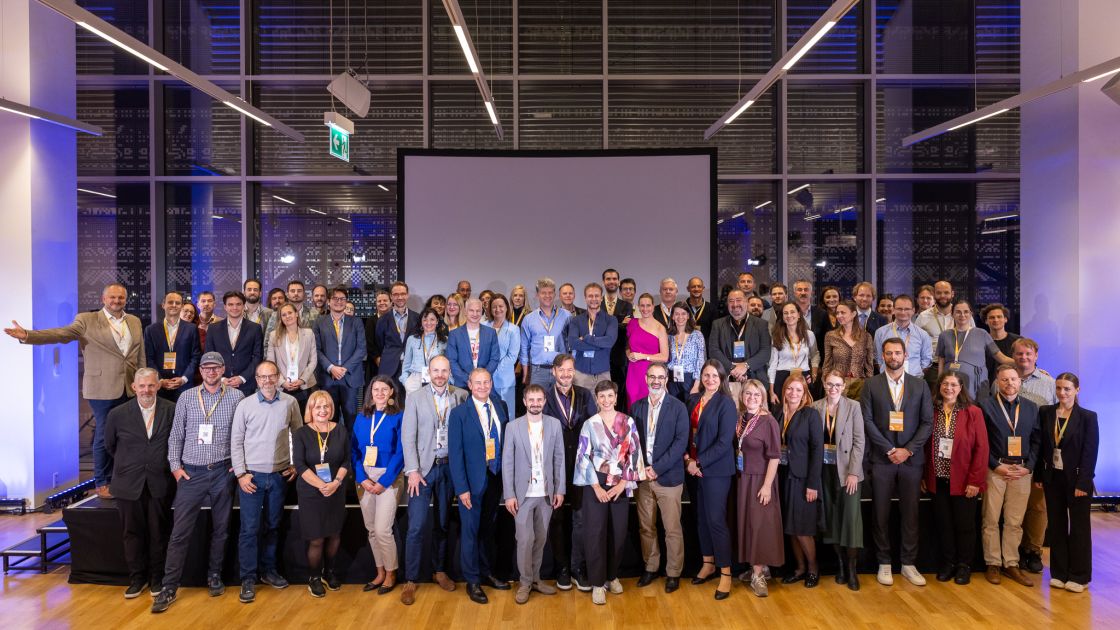

Innovation, therefore, is only the first step. For systemic change to occur, the entire ecosystem must work together. This year’s CEE4Impact Day focused on the path toward systemic change.
Ten years ago, at the first CEE4Impact Day, positive social impact was still an optional choice. Since then, humanity entered an era of global crises, already feeling the consequences of the new coronavirus pandemic, wars and climate change in our daily lives, firsthand. Today, the question is no longer how we can cause slightly less harm to our environment while continuing to exploit it, but rather how quickly we can build an economy that gives back more than it takes.
However, the regenerative economy is not merely a theoretical concept. Practical approaches, tests, and easy-to-apply methods are also presented in the recently published book by the conference’s keynote speaker, Blandin, titled ‘The Seven Principles Playbook for Sustainable Companies’, in which he writes, “Growth is not the problem. Extraction is the problem.” In his view, we do not have to choose between growth and sustainability.
We must find a path that allows for growth while remaining within the planet’s limits. As investors, for example, we need to ask ourselves a simple question: “Impact is simply the world with us minus the world without us” – that is, what would change in the world if we didn’t make this investment?
ESG compliance and CSR are important, but they are no longer sufficient on their own. According to Arnaud Blandin, sustainability, innovation, and data-driven decision-making must be integrated into companies’ core strategies. And for this to happen, it’s not enough for just one player to change: the entire ecosystem needs to work together – from entrepreneurs and scaleups to VC/PE investors and institutional capital, all the way to large corporations.


Top 5 Articles
 What Awaits the Hungarian Economy in 2026 and 2027? April 24, 2026
 - Cherishing Italian Cultural Presence in Hungary September 3, 2026
- Consolidating the Good Bilateral Relations May 10, 2026
- Two Vantage Points, One Direction August 22, 2026
- Business, Consumer Confidence at Two-Year High in April April 23, 2026