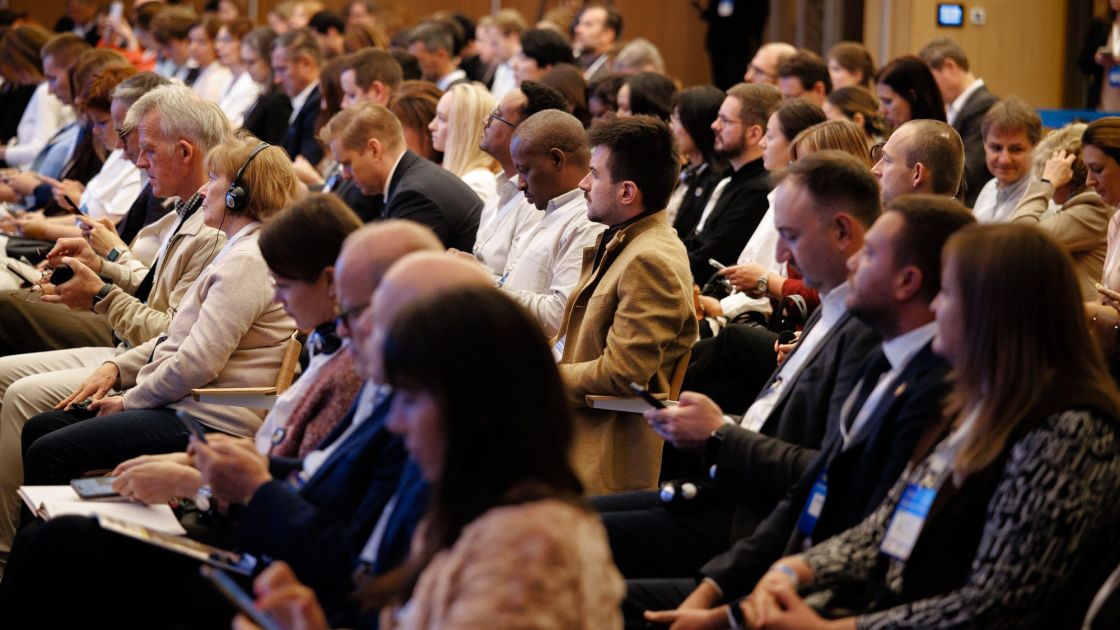

Today, the circular economy is no longer simply about what happens to waste, but also about how many raw materials we use, how we design our products, and what business decisions we make. At the European Circular Economy Hotspot held in Budapest, with nearly 300 participants from more than 20 countries across four continents, international experts and corporate representatives demonstrated why recycling alone is not enough and what is preventing existing solutions from becoming more widespread, the organizer Business Council for Sustainable Development in Hungary (BCSDH) said in a statement.
The event honored Hungarian innovations, discussed financial and regulatory issues, and on the final day, used industrial and urban examples to demonstrate how the circular economy works in practice.
The concept of the circular economy is simple: products and raw materials should not become waste too quickly but should remain in use for as long as possible. However, putting this into practice is far more complicated than simply installing more recycling bins. If material consumption continues to rise, product lifespans continue to shorten, and new raw materials remain cheaper than recycled ones, then the fundamental functioning of the system will not change.
Willem van Ee, the Ambassador of the Kingdom of the Netherlands to Hungary, presented the grand prize of the Dutch Embassy’s Sustainable Tulip Award to Soundwool, which manufactures acoustic panels from domestic and regional wool waste. A special award was given to the Beyond Packaging university and corporate consortium for its process aimed at processing plastics no longer suitable for traditional mechanical recycling, as well as to the Symbiosis Foundation for its project implemented at the Baráthegy Manor. The Miskolc-based organization combines sustainable economic activity with the employment and support of people with disabilities.
The BCSDH executive director Irén Márta ceremonially handed over the baton to the Czech Republic, which will host the next European Circular Economy Hotspot in Brno from October 20 to 22, 2027. The European venues for the 2028 Hotspot were also announced at the same event. In two years, one part of the event will be hosted by the Baltic Circular Hotspot in two countries — Estonia and Lithuania — while the other venue will be Bucharest, where the Circular Economy Coalition won the right to host the event.


Top 5 Articles
 What Awaits the Hungarian Economy in 2026 and 2027? April 24, 2026
 - Cherishing Italian Cultural Presence in Hungary September 3, 2026
- Consolidating the Good Bilateral Relations May 10, 2026
- Two Vantage Points, One Direction August 22, 2026
- Business, Consumer Confidence at Two-Year High in April April 23, 2026