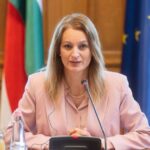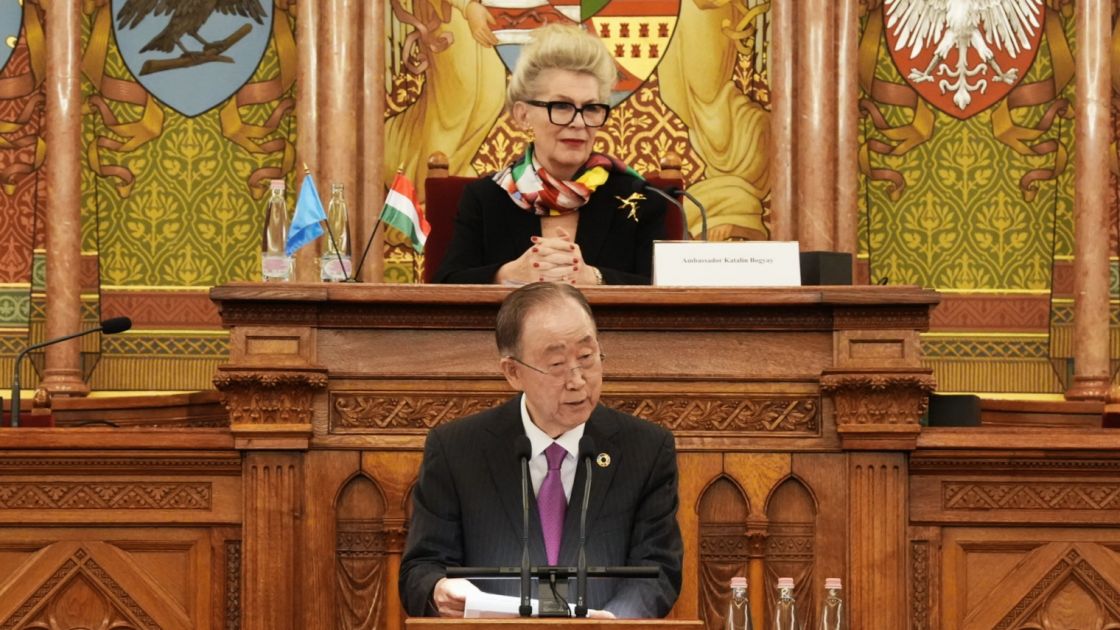

The history of the relationship between the 1956 Hungarian Revolution and the United Nations is receiving the attention it deserves at the Parliament on the 70th anniversary of the revolution. Ágnes Forsthoffer, Speaker of the National Assembly, has taken on the role of patron of the international conference entitled ‘The 1956 Revolution and the UN’. The event was opened by Anita Orbán, Deputy Prime Minister and Minister of Foreign Affairs and Zoltán Tarr, Minister of Social Relations and Culture.
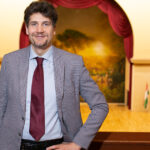
The conference was initiated and organized by Katalin Bogyay, former UN Ambassador and President of the World Federation of United Nations Associations, who organized the commemoration of the 50th anniversary of the revolution in London in 2006 under the patronage of Prince Charles, now King Charles III. The conference’s guest of honor is Ban Ki-moon, former UN Secretary-General, who supported the opening of the archives during his term in office.
The UN Security Council already discussed the situation in Hungary on October 28, 1956. On 4 November, a Soviet veto prevented the adoption of a US resolution calling for the immediate withdrawal of Soviet troops. The General Assembly discussed the Hungarian issue at an extraordinary session that same day and called on the Soviet Union to withdraw its troops. It also adopted a separate resolution to help Hungarian refugees. On January 10, 1957, the General Assembly established a special committee to hear eyewitness accounts and produce a report on the events. The committee's second secretary, Danish diplomat Povl Bang-Jensen, refused to hand over the names of the Hungarian witnesses who had been confidentially heard, fearing that their relatives remaining in Hungary might face reprisals. The UN initiated disciplinary proceedings against him in the matter. Bang-Jensen was found dead in New York in November 1959. Some of the documents related to the work of the special committee and the Bang-Jensen case only became available for research in 2016.
On the 50th anniversary – in London in 2006 –, at the initiative of Katalin Bogyay, the then Prince of Wales, now King Charles III, took on the role of chief patron of the commemoration. King Charles took on the role of the main patron of the commemoration. The event at St James's Palace was a chance to remember the heroes of the revolution and to showcase what Hungarians who came to Britain after 1956 have given to their host country in the fields of science, art and public life. The parliamentary conference now being held examines another aspect of this story: how the refugees were organized and what role the UN played in this.
Ten years later in New York City, following the research initiative of historian András Nagy, Katalin Bogyay, Hungary's then-permanent representative to the UN, initiated the diplomatic process that ultimately led to the opening of the previously sealed documents. Katalin Bogyay negotiated with the then UN ambassadors of the United States and Russia, Samantha Power and Vitaly Churkin, as well as with the UN leadership and Povl Bang-Jensen's son.
As a result of the diplomatic negotiations, approximately 1,500 pages of documents became available for research in 2016. Of these, 400 pages of previously strictly confidential documents were kept in the UN archives, while the remaining documents are located in the Cordier Collection at Columbia University. Among the documents are records related to the operation of the UN's special committee examining the Hungarian question, witness testimonies, and documents concerning the Danish diplomat Povl Bang-Jensen. András Nagy was the first to gain research access to the materials, and he has since published the research results in both Hungarian and English and will also present them at the conference.
The process was given special personal significance by Ban Ki-moon's connection to 1956. As a South Korean student, he read out the letter addressed to UN Secretary-General Dag Hammarskjöld at his school, in which help was requested for Hungarians fighting for freedom and democracy. As Secretary-General, he supported the declassification of the documents and the commemoration of the sixtieth anniversary in New York.
"For the seventieth anniversary, I have always dreamed of returning to the Hungarian Parliament, and finally speaking in that place about the relationship between the UN and the Hungarian Revolution, its lessons, and the challenges facing the UN, from where the messages and letters requesting UN support were sent at the time. Therefore, it is a particular honor for me that the Speaker of the House accepted my invitation and took on the role of chief patron. Former UN Secretary-General Ban Ki-moon also accepted my invitation. Thus, at the highest diplomatic and scientific level, with the participation of Hungarian and foreign experts and politicians, we can discuss 1956 at this historic site," Katalin Bogyay said.


Top 5 Articles
 Cherishing Italian Cultural Presence in Hungary September 3, 2026
- Indotek Group Acquires 100% of Auchan Magyarország June 26, 2026
- Ágnes Forsthoffer, Interim Hungarian President July 20, 2026
- Two Vantage Points, One Direction August 22, 2026
- Sziget Must 'Move Forward to Break Free' August 16, 2026