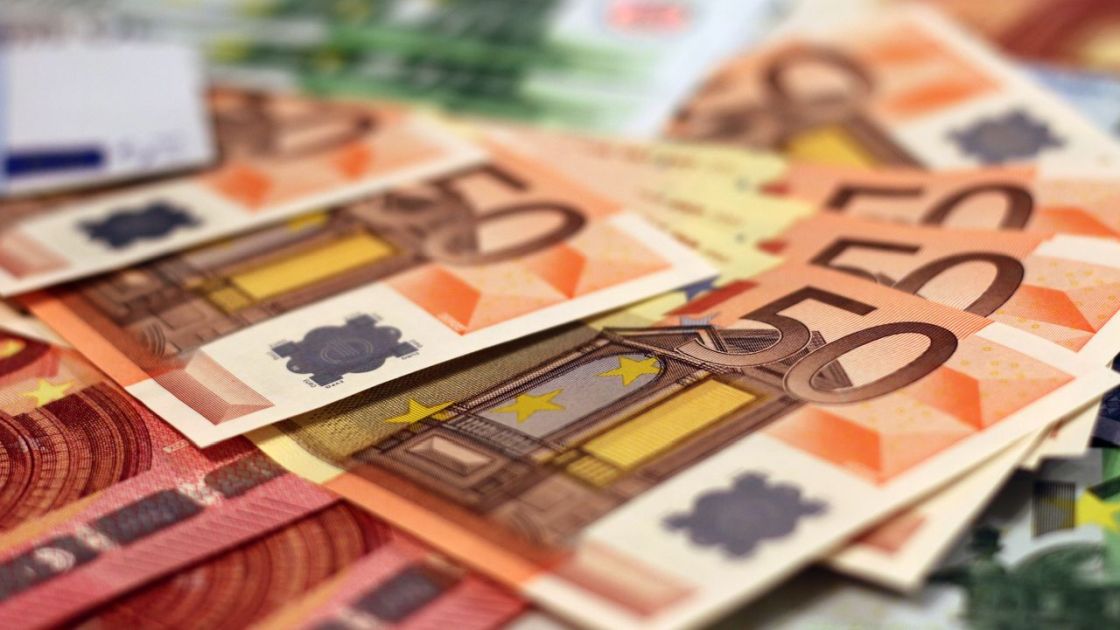

The adoption of the euro could compel the government to maintain fiscal discipline, help anchor inflation expectations, establish exchange rate stability and reduce financing costs, the head of the Government Debt Management Agency (ÁKK), Gergely Tardos said at a conference in Budapest on Friday.
The government's decision to set the adoption of the euro as a goal has fundamentally transformed expectations regarding Hungarian economic policy, Gergely Tardos stated.
He said the budgetary trajectory for next year and the medium term is based on conservative estimates, outlining a realistic fiscal path in contrast to earlier overly optimistic forecasts. The stock of Hungarian government securities held by foreign investors has risen from HUF 6,000bn to HUF 11,000bn, signaling a significant vote of confidence in Hungarian economic policy.
Gergely Tardos added that another significant expected benefit of the introduction of the euro is yield convergence and he noted that Hungarian ten-year yields fell from 7.2pc to 5pc following the general election in April.
By the time of entry into ERM II, long-term yields could fall to levels around 4pc, and in a favorable geopolitical environment, they could potentially fall even further, contributing to cutting the annual cost of servicing national debt to HUF 2,000 billion from the current HUF 4,000 billion, he pointed out.
Gergely Tardos noted, however, that in countries that previously struggled with high interest rate levels, rapid credit growth occurred following euro adoption, which entailed risks.
The ÁKK head said there is a strong possibility that all three major credit rating agencies will revise Hungary’s negative outlook before the end of this year, with the potential for an actual rating upgrade next year. This is contingent upon the consistent adherence to the fiscal trajectory laid out and staying on the path for euro adoption.
Pál Péter Kolozsi, managing director of economic research institute GKI, pointed out that the euro, on its own, does not solve competitiveness and structural problems, but can strengthen market confidence, create a more stable financial and exchange rate environment and act as a catalyst for a competitiveness turnaround.
He added that meeting the Maastricht criteria is not sufficient on its own; convergence in the real economy is also required. Euro adoption is not the end of a process, but the beginning of a new phase, and the financial criteria must continue to be met thereafter.


Top 5 Articles
 Cherishing Italian Cultural Presence in Hungary September 3, 2026
- Indotek Group Acquires 100% of Auchan Magyarország June 26, 2026
- Two Vantage Points, One Direction August 22, 2026
- Ágnes Forsthoffer, Interim Hungarian President July 20, 2026
- Sziget Must 'Move Forward to Break Free' August 16, 2026