The Budapest campus of the renowned French management school ESSCA offers professional business education and humanistic values in a great international atmosphere. According to its mission statement, ESSCA creates knowledge and develops responsible managers and entrepreneurs, while fully considering planet boundaries, and the human, ethical and economic dimensions of organizations in a sustainable and multicultural environment driven by technological trends or social innovations.
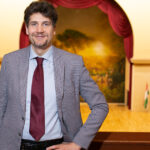
Professor Dr. Zsuzsa Deli-Gray, Director of ESSCA’s Budapest Campus, which dates back over three decades, recalls that “our strategy for the period 2020-24, called Odysseus, was based on three main pillars: (1) ‘innovation’ serving stakeholders, meaning that we offer innovative solutions in new innovative ways not only to students but to all stakeholders that benefit society as a whole;(2) ‘organizational design’ in order to maximize the efficiency of all of our activities (3) ‘quality’, which forms the basis of all our activities: quality education, quality processes; quality in how we interact with our stakeholders and quality of how we fulfill our social responsibility.”
Revised strategy
The coronavirus pandemic in 2020 changed the healthcare and geopolitical systems so much that ESSCA reviewed its strategy two years later. The Campus Director elaborates that “we have opened new campuses in Europe and further strengthened our commitment to sustainable development and CSR. In fact, we have reinforced the role of education in helping our students learn, work and think in an increasingly responsible manner. We have strengthened our programs by incorporating the appearing new challenges and new environmental conditions, and we have begun rebranding the school.”
She points out that in 2025, the school developed a new strategy called 'Kairos 2030'. The word ‘Kairos’ comes from ancient Greek, defining the precise and unique moment when decisive action is possible. It symbolizes the ability to identify unique opportunities when circumstances are met in order to act. This is also apt because ESSCA believes that in this uncertain, changing environment, which at the same time presents more and more unknown opportunities, it is necessary to seize these kinds of unique chances for the school to develop further and become useful and precious to the public. “The four pillars of our Kairos 2030 strategy are (1) innovation in research, programs and pedagogy; (2) internationalization; (3) operational effectiveness; and (4) employer branding and institutional outreach.”
KAIROS can also be interpreted as an acronym. ‘K’ stands for knowledge, which is at the heart of ESSCA’s mission to create and transfer knowledge to students and share this knowledge with the society. ‘A’ stands for artificial intelligence, with which the school is committed to incorporating renewable social developments into the curriculum and school processes. ‘I’ is for international, as ESSCA is an international school of management, so internationalization can refer to the location of the campuses, the international nature of the students and teachers, the international student and professor experiences, the international accreditations, the intercultural approaches, the international company and alumni networks. ‘R’ is for responsible as one of the stated values of ESSCA. ‘O’ stands for openness in a sense that the school is really open to possibilities, diversity and inclusion, that is, to have open hearts and open eyes to embrace these areas and be able to offer solutions. Finally, ‘S’ is for sustainability, as ESSCA strengthens its commitment to sustainable development and corporate social responsibility every year. “Let's not forget that the four values that form the foundation of our school remain unchanged: humanism, responsibility, agility and reliability, around which all our activities and commitments are centered,” she adds.
Partnership with the business sector
The corporate world has always played a central role in the life of ESSCA. Local and international companies are involved in many aspects of the school's life at all of the Campuses. Dr. Zsuzsa Deli-Gray stresses that “even when designing our curriculum, we involve company leaders to share with us what knowledge companies and businesses actually look for. We invite a lot of company executives to the courses to talk about the real situations, problems and dilemmas they face. It is beneficial that every course includes a company visit and/or a business project so that students can go out and observe an actual company environment, the operating conditions, the processes or warehouses, etc. This way, they can see how companies in different countries/regions are actually structured, how the processes work, how different approaches are used and how they can immediately apply their theoretical knowledge in real situations. Since students in our bachelor's, master's, and five-year integrated programs must complete several internships, these companies also offer internship and work opportunities to them. We also organize company forums where students can get familiar with communicating with company managers, having a real interview with an HR expert, and comparing company functions and industries.”
Protected business environment
The fact that students are being trained to become managers and successful business leaders manifests itself in the institution's daily activities. There are incubators at several ESSCA campuses where students can start a business while they are still studying. This is obviously done with the help of their professors and the campus in a protected environment receiving all the help they need, but at the same time, they already learn what needs to be done when starting a business, what difficulties they face and what opportunities they have.
At ESSCA, great emphasis is placed on student life and the student experience at all campuses. “In fact, we organize many programs for students, but we also provide them with the opportunity to organize programs themselves and present those to the management of ESSCA. If ESSCA finds the project feasible from a professional point of view, it will also contribute to its financing. Once the project has been validated by ESSCA, the students who submitted the idea have to plan it step by step, like real managers, and submit a professional financial plan and an operational plan. During implementation, they have to continuously report on their progress, calculate expenses, pay attention to how they can source additional funds in the projects, and, in the end, they obviously have to be able to explain how all this contributed to the well-being of other students or even the society,” the Campus Director explains.
International community for ever
The ESSCA campus in Budapest has approximately 750 students from all over the world, forming an international community. As Dr. Zsuzsa Deli-Gray highlights, there are students who complete their entire education here, which, of course, includes participating in an international semester but they maintain their enrollment at the Budapest campus for their entire education. "They are joined by our students from other ESSCA campuses, who can spend one, two or three semesters here with us, as well as students from our partner universities who choose our school. The school has 279 partner universities in 55 countries, and we currently have students from around 35 countries here in Budapest. All this creates the opportunity for students to learn about a wide variety of approaches. Beyond classroom projects, this experience greatly expands students' social networks. They can count on these classmates for future professional and personal collaborations, even after graduating or returning home, leveraging a vast amount of human and social capital.”


Top 5 Articles
 What Awaits the Hungarian Economy in 2026 and 2027? April 24, 2026
 - Cherishing Italian Cultural Presence in Hungary September 3, 2026
- Consolidating the Good Bilateral Relations May 10, 2026
- Indotek Group Acquires 100% of Auchan Magyarország June 26, 2026
- Two Vantage Points, One Direction August 22, 2026