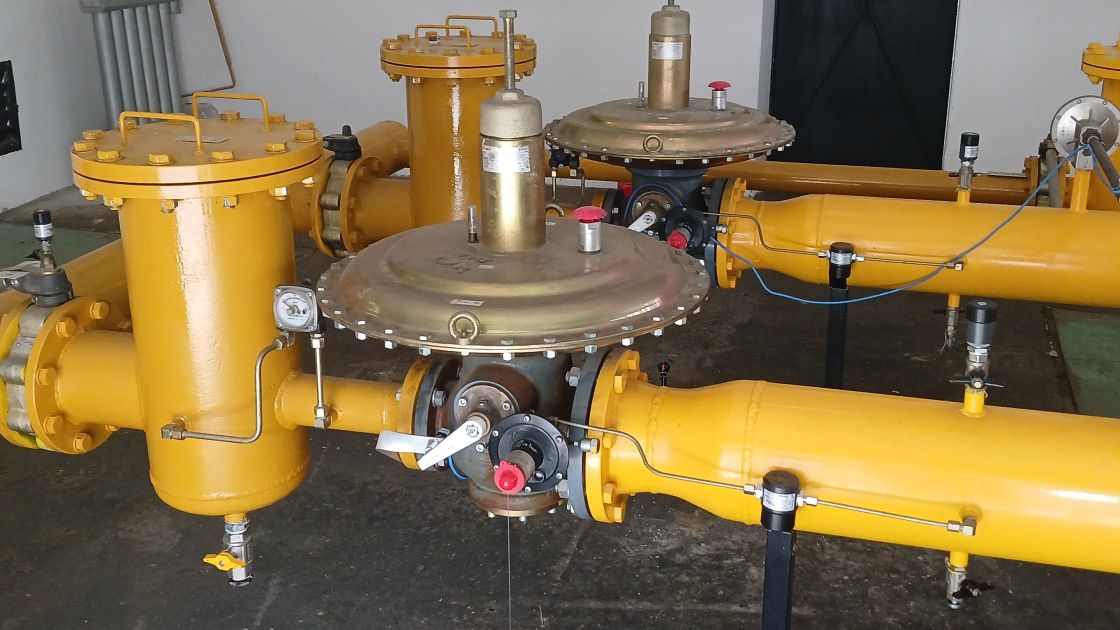

The E.ON Hungária Group has introduced a digital monitoring system at all of its pressure regulation stations; the goal of this initiative is to reduce methane emissions, enhance supply security, and ensure safe network operation, the company said in a statement on Monday.
The investment, valued at HUF 600 million, was financed by the E.ON Hungária Group using its own funds.
E.ON supplies natural gas to 620,000 customers in six counties in Transdanubia: Baranya, Tolna, Fejér, Veszprém, Zala, and Somogy. Using a digital testing method applied across the entire network, the amount of methane released into the atmosphere during inspections of pressure-regulating stations can be reduced by up to 90% compared to traditional testing procedures, the company explained.
Natural gas enters the network at high pressure, but it can only be used safely in homes and institutions at a low, precisely set pressure.
This is regulated by pressure-regulating stations, of which there are approximately 900 on the E.ON network. Previously, during annual inspections, the gas required for testing inevitably escaped into the environment. Thanks to the new digital technology, the tests are conducted without releasing significant amounts of gas into the atmosphere, E.ON Hungária emphasized in its press release.
Precisely calibrated pressure regulators minimize the risk of errors and the possibility of human error. The computer-controlled testing process, which eliminates human error, and the digital analysis of measurement results facilitate the early detection of deviations that could lead to malfunctions. Supply security is further enhanced by a remote monitoring system that immediately alerts operators if, for unforeseen reasons, pressure fluctuations in the gas network exceed permissible limits, E.ON stated.


Top 5 Articles
 What Awaits the Hungarian Economy in 2026 and 2027? April 24, 2026
- Cherishing Italian Cultural Presence in Hungary September 3, 2026
- Consolidating the Good Bilateral Relations May 10, 2026
- Indotek Group Acquires 100% of Auchan Magyarország June 26, 2026
- Two Vantage Points, One Direction August 22, 2026