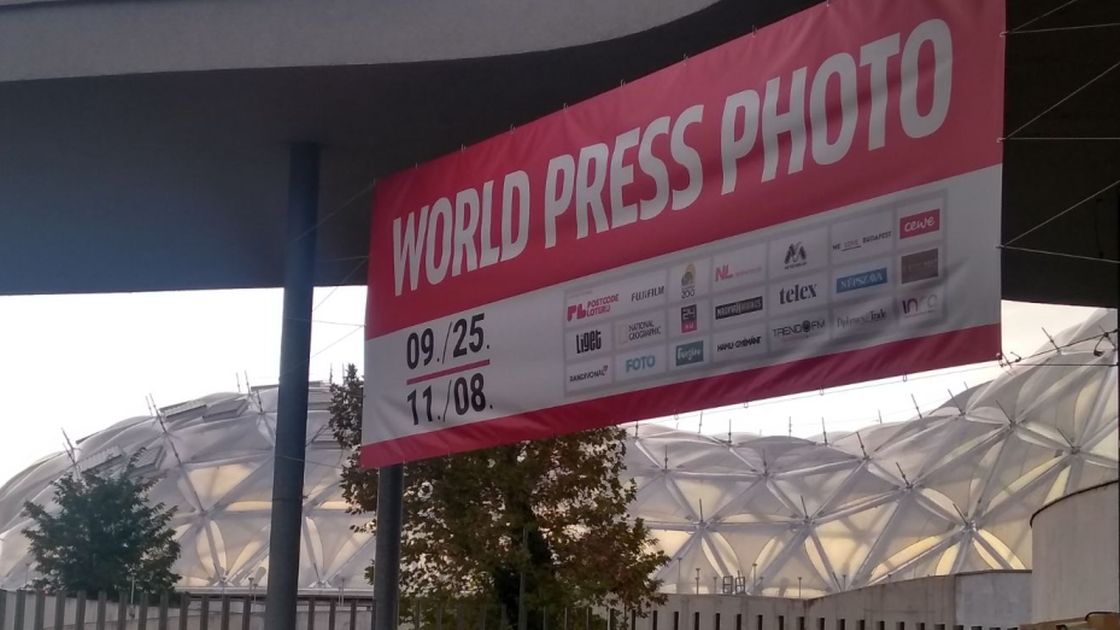

The World Press Photo exhibition, which opened at the Biodome in Budapest on Thursday evening, presents the works of 42 award-winning photographers. The Biodome, the event's home since the exhibition was forced out of the state-run Hungarian National Museum under the previous Fidesz government, is hosting it for the last time.
The pictures on display depict the most pressing problems of the present, from devastating conflicts and excesses by law enforcement to the climate crisis and the enforcement of women's rights.
"The reality this exhibition presents from year to year, the reality it reveals and confronts us with, the reality it thrusts before our eyes, is our own reality. It does not have to please us; it's enough if it makes us think," Budapest mayor Gergely Karácsony said in his speech opening the exhibition.
Alongside the World Press Photo material, visitors can again see accompanying exhibitions this year. One exhibition presents the most memorable pictures of the 2026 election by the photojournalists of 24.hu, while a selection of photographs by Sándor Bojár, a former photojournalist of MTI, commemorates the revolution of 1956.
Endre Sós, director general of the Budapest Zoo and Botanical Garden, noted that this is the third and final time the Biodome is hosting the World Press Photo exhibition.
As Gergely Karácsony said, "it would be right for the World Press Photo exhibition to find its home in a state museum once more."
In 2023, the government barred visitors under 18 from the exhibition at the National Museum, ruling that certain photographs violated a law restricting the display of LGBTQ content to minors. In 2024, with no state institution willing to host the exhibition, the city of Budapest offered it a home at the Biodome, a half-finished botanical garden complex in the Városliget (City Park).
"Democracy exists where people can not only speak freely about reality but also freely come to know it, and this exhibition, with its own means, does much for that," the mayor stated.
"Year after year we must confront the fact that we will not be in a better mood after viewing the year's best works," he added. "This is not the fault of the pictures or the photographers but of the world and of all those who have made the world what it is."
The ambassador of the Kingdom of the Netherlands to Budapest, Willem van Ee said in his address that "knowledge of reality can help us act to make the world a better place," stressing the importance of press freedom.
He noted that journalists and photojournalists are working under ever greater pressure, yet they continue their work. The ambassador described journalism as a tremendous force that shows us, among other things, the conflicts in Ukraine, Sudan and Gaza, and the horrors unfolding elsewhere in the world. The World Press Photo exhibition at the Biodome is open until Nov 8. The winners of the 2026 World Press Photo Contest were chosen by an independent jury of 31 professionals from around the world, who reviewed more than 57,000 photographs by 3,747 photographers from 141 countries.


Top 5 Articles
 What Awaits the Hungarian Economy in 2026 and 2027? April 24, 2026
 - Cherishing Italian Cultural Presence in Hungary September 3, 2026
- Consolidating the Good Bilateral Relations May 10, 2026
- Two Vantage Points, One Direction August 22, 2026
- Business, Consumer Confidence at Two-Year High in April April 23, 2026