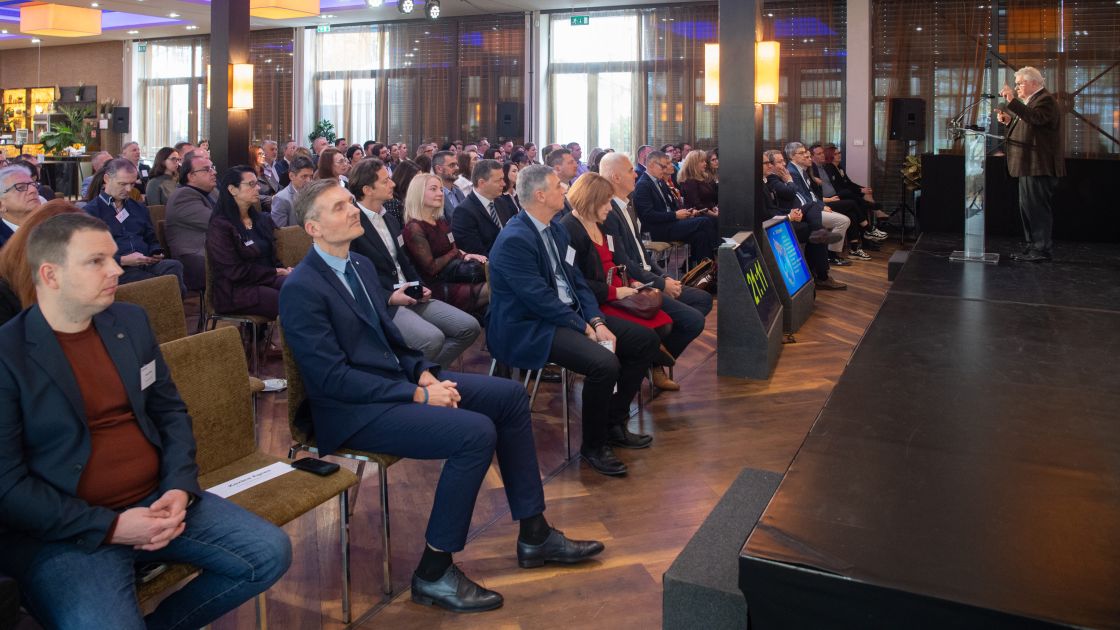

Will the extreme weather events of 2026 truly mark a turning point in how climate change is viewed from an economic perspective? The disruption of the balance in natural systems is having increasingly severe consequences for the business world. We are in the 25th hour; we must act immediately and collectively, across multiple areas simultaneously. This was the theme of the BCSDH business lunch held this week, focusing on climate resilience.
Corporate profitability is declining, the risk of damage to physical assets is rising, and disruptions affecting supply chains, infrastructure, and the functioning of society are becoming increasingly frequent. Physical climate risks have now become business risks that shape the economy. All of this calls for a new management mindset.
At a business luncheon hosted by the Hungarian Business Council for Sustainable Development (BCSDH) –an organization comprising 153 member companies that generate approximately 40% of Hungary’s GDP – the economic implications of climate resilience and the importance of taking action were the focus of discussion.
Europe is warming twice as fast as the global average, so the window of opportunity for adaptation is even shorter here. Hungary is also particularly affected, which poses an even greater challenge for domestic companies. The Draghi Report also warns that Europe’s future economic performance is closely linked to strengthening energy supply, water security, critical infrastructure, and climate resilience.
“A significant portion of the effects of climate change manifests itself through water. The probability of extreme events will increase, meaning more floods are expected; at the same time, however, the severity of droughts is expected to increase both spatially and temporally. Here, too, Hungary is more exposed to these extremes than average. Therefore, every water management organization must prepare for the rational planning of water management. Only 0.007% of the Earth’s water resources are available as surface water, to which we have direct access. The accelerating pace of climate change is already indicating that we are facing a water crisis.” That is according to Prof. Dr. András Szöllősi-Nagy, Vice Chair of the Intergovernmental Council of the UNESCO International Hydrological Program and Doctor of the Hungarian Academy of Sciences (MTA), speaking at the event.
“Climate change and water-related conflicts must not be approached solely from an engineering perspective, as water management is a critical economic, sociological, and political issue. In the coming years, the greatest risk factors will be water problems, extreme weather, the failure to address climate change, and their social consequences. With the use of big data algorithms and AI now available, technological barriers have essentially been eliminated. Global change and adaptation are necessary at every level of water management,” the Professor added.
The risks posed by climate change – such as disruptions to water supply, damage to physical assets, and a decline in labor productivity – are driving up companies’ costs while reducing their operational efficiency. According to the BCSDH’s latest 2026 “Towards Net Zero” study, while 86% of companies perceive the effects of climate change in their operations, only 34% have a climate adaptation action plan. Although, it is a significant increase from 16% two years ago, only 25% have assessed how resilient their strategy or business model is to these changes. Companies urgently need to rethink their climate resilience and adaptation plans to protect their long-term viability and their business and social value.
The business lunch also saw the singing of strategic cooperation agreement between Corvinus University and the BCSDH: it was established to develop joint executive programs and to create synergies between university education and corporate practice.
The 2026 Awards for a Sustainable Future were handed over at the event as well. The awards, created to recognize outstanding corporate and leadership achievements in advancing the Sustainable Development Goals and driving systemic change, were presented – based on the decision of the expert jury – to K&H Bank, Graphisoft Park, Centrum Gumi, Coca-Cola HBC Hungary Ltd., and Grundfos Hungary Ltd. in their respective corporate categories. János Handó (Katica Tanya) received the Change Leader award, while Brigitta Balla (UnicreditBank) and Anikó Huber (MieleMed) were given the Women Leaders award.


Top 5 Articles
 Cherishing Italian Cultural Presence in Hungary September 3, 2026
- Indotek Group Acquires 100% of Auchan Magyarország June 26, 2026
- Two Vantage Points, One Direction August 22, 2026
- Ágnes Forsthoffer, Interim Hungarian President July 20, 2026
- Sziget Must 'Move Forward to Break Free' August 16, 2026