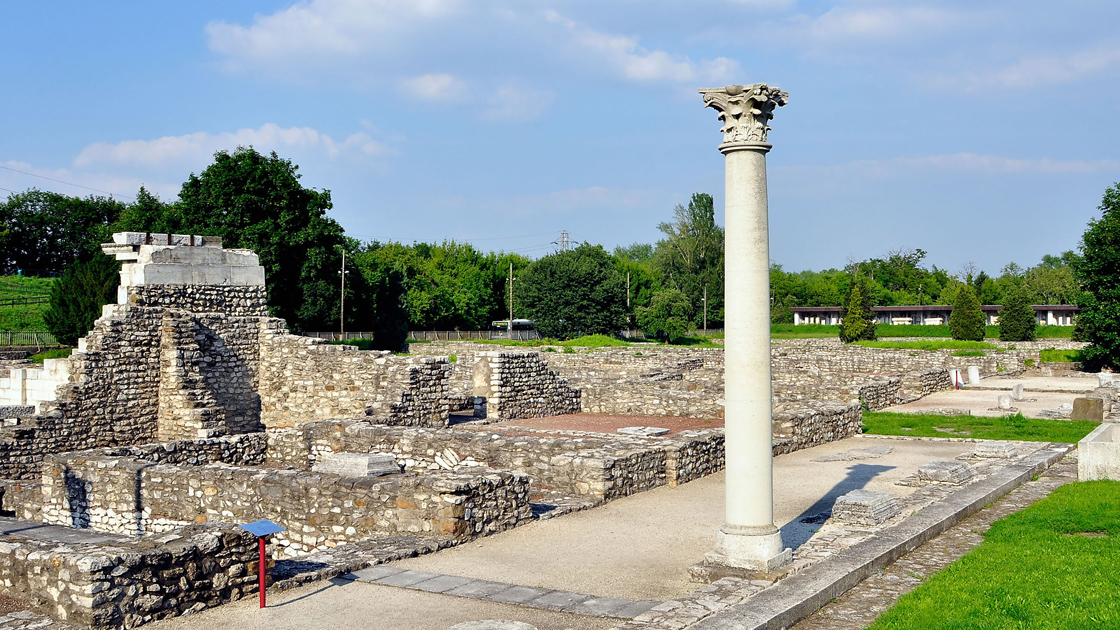

There's a saying that goes: "The more you know, the more you enjoy." During my years at the Korean Ministry of Foreign Affairs, when working through the night was commonplace, I took pride in being able to answer confidently whenever my superiors asked me a question.
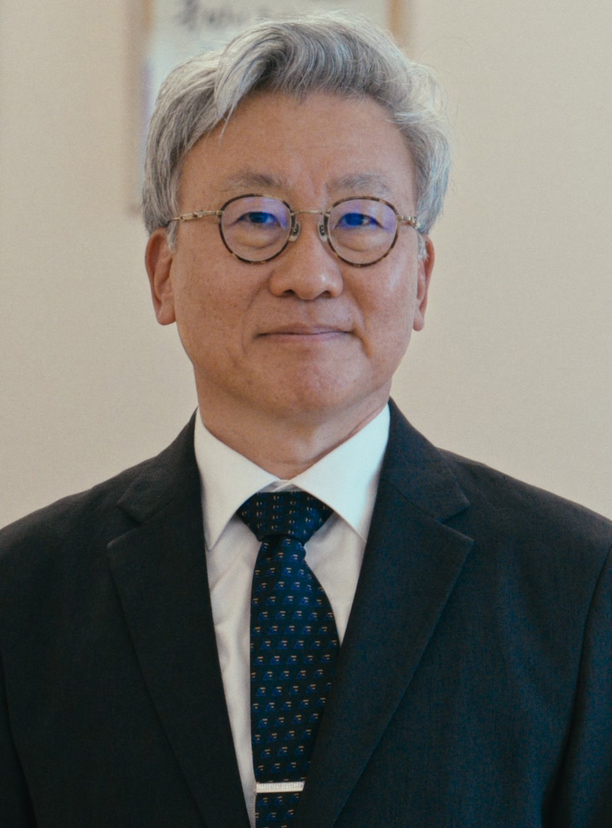
The work itself was genuinely enjoyable. As I spent more time working and living in Europe, however, I discovered new sources of fulfillment and joy.
Beauty and diversity
At some point, I developed an interest in Western architectural styles. That interest grew especially during my first tenure as Korea’s ambassador to Hungary. Exploring Budapest and traveling throughout the country, I was constantly struck by the beauty and diversity of Hungary's historic architecture. What has surprised me is that, even during my second time in Budapest, that sense of wonder has not diminished. I still find myself stopping to admire buildings I have seen before, captivated by their beauty, history and character. Budapest – with its historic center protected as a UNESCO World Heritage Site – offers an extraordinary setting for this kind of exploration. I found great pleasure in visiting centuries-old buildings and comparing their breathtaking architectural styles firsthand.
Eastern frontier of the Roman Empire
After completing my first tenure as Ambassador Extraordinary and Plenipotentiary of the Republic of Korea to Hungary and returning to Korea, I published my memoir, ‘My Life as a Diplomat’ (외교관은 나의 인생), in 2024. In the book, I introduced Hungary's historic and remarkably diverse architectural heritage to Korean readers. I would now like to share that exact content with Hungarian readers here, essentially as it appeared in that book: Budapest once marked the Eastern frontier of the Roman Empire. The Danube River, flowing from North to South, divided the region: Buda on the Western bank belonged to the civilized world of Rome, while Pest on the Eastern bank was regarded as barbarian territory.
If you visit Old Buda, the city's oldest district, you'll find the remains of Aquincum, where parts of a Roman military camp and civilian settlement from nearly 2,000 years ago have been preserved. Even without traveling all the way to Pompeii in Italy, these ruins offer a vivid impression of what ancient Roman cities must have looked like.
Ancient foundations
Western architectural history begins with the temples, palaces, and other landmark structures built during the eras of ancient Greece and the Roman Empire. Greek architecture is distinguished by its elegant column-based construction, while Roman architecture is characterized by massive walls. Despite their differences, both embody an elegance born of simplicity.
If you encounter a building anywhere in Europe that was constructed between roughly the 10th century and the early 13th century, you can safely assume it belongs to the Romanesque style.
Based on Roman architectural principles, Romanesque buildings feature thick masonry walls, narrow semicircular arched windows, and sturdy doorways framed by vertical columns.
The Gothic style developed from the late 12th, 13th century through the late 14th century. Its most recognizable feature is its soaring spires that seem to pierce the sky. To build such lofty structures required new engineering solutions. Architects developed rib vaults resembling skeletal ribs, pointed arches, and flying buttresses positioned outside the main structure to support the immense weight.
Buildings constructed during the roughly two centuries after the 15th century generally belong to the Renaissance style. While Renaissance architects sought to revive the architectural ideals of ancient Greece and Rome, they did so through the lens of humanism, designing buildings whose proportions better suited the scale of human beings. Harmony and proportion became central principles. Triangular pediments, circular rose windows, and semicircular arches are all characteristic features.
As the Renaissance gave way to the Counter-Reformation, the Baroque style emerged and flourished from the late 16th through the 18th century. Baroque buildings project outward with dramatic façades and display lavish ornamentation both inside and out, far surpassing the decorative restraint of earlier styles.
Buildings dating from the 18th century through the early 19th century generally reflect Neoclassical architecture. Inspired once again by ancient Greece and Rome, Neoclassicism retained many features of Romanesque and Renaissance architecture while taking advantage of improved construction materials to create more practical designs.
Long cultural history
Hungary possesses a remarkably long cultural history, stretching back more than 2,000 years to Roman times and over a thousand years since the founding of the Hungarian Kingdom in 896. Yet because of the Mongol invasions and approximately 150 years of Ottoman rule, it is a shame that relatively few original medieval structures have survived.
By the late 19th century, Budapest ranked alongside New York, Paris, and London as one of the world's four great cities. Tragically, it suffered devastating destruction during the two World Wars. Fortunately, thanks to the Hungarian government's sustained restoration efforts, many of its historic buildings have been reconstructed to closely resemble their original forms.
If you see a building in Hungary that was erected during Budapest's early- to mid-19th-century golden age, it is most likely Neoclassical. Buildings constructed in the late 19th century around the celebrations marking the millennium of the Hungarian state in 1896 typically belonging to the Eclectic style.
Neoclassical architecture emphasizes perfect symmetry and features triangular roof pediments known as tympanums. Representative examples include Sándor Palace (the President's official office), the Hungarian National Gallery, and St. Stephen's Basilica.
The official residence of the Korean ambassador to Hungary is itself an excellent example of Neoclassical architecture. Designed in 1846 by the renowned architect József Hild, the residence is both beautiful and remarkably spacious. In fact, many of my fellow ambassadors have expressed their envy of my good fortune in living in such a distinguished residence in such a renowned neighborhood.
Eclectic architecture, by contrast, freely combines and revives earlier styles, often adding the prefix "Neo-" to reinterpret historical forms. The Hungarian Parliament Building along the Danube and Matthias Church in the Buda Castle district are examples of Neo-Gothic architecture, while Fisherman's Bastion is Neo-Romanesque. Budapest also boasts a number of beautiful Art Nouveau buildings dating from the early 20th century.
Art Nouveau sought to break away from the past in pursuit of something entirely new. Inspired by nature, plants, and animals, it rejected flat façades in favor of flowing, irregular forms that showcase artistic creativity. Just across Budapest's iconic Chain Bridge, the Four Seasons Hotel Gresham Palace is one of the city's finest examples of Art Nouveau architecture.
The charm of Budapest
On weekends, whenever I got time, I walked from Gellért Hill through Liberty bridge until the roughly two-kilometer stretch of Andrássy Avenue to Heroes' Square. Somehow, those leisurely strolls would take me nearly six hours to complete.
Recently, many Korean tourists have been traveling back and forth between Korea and Hungary every day via flagships Korean Air and Asiana Airlines, and I hope that after reading this article, even more Koreans will fall in love with the charm of the Hungarian capital.


Top 5 Articles
 Cherishing Italian Cultural Presence in Hungary September 3, 2026
- Indotek Group Acquires 100% of Auchan Magyarország June 26, 2026
- Two Vantage Points, One Direction August 22, 2026
- Ágnes Forsthoffer, Interim Hungarian President July 20, 2026
- Sziget Must 'Move Forward to Break Free' August 16, 2026