
The Yunus Emre Institute is a world-wide non-profit organization created by the Turkish government in 2007. Named after the famous 14th-century poet, Yunus Emre, it aims to promote Turkish language and culture around the world. Its objectives include carrying out educational practices with certificate programs in fields such as Turkish language, history, culture and art. The one established in Budapest in 2013 was the first such institution in the European Union.
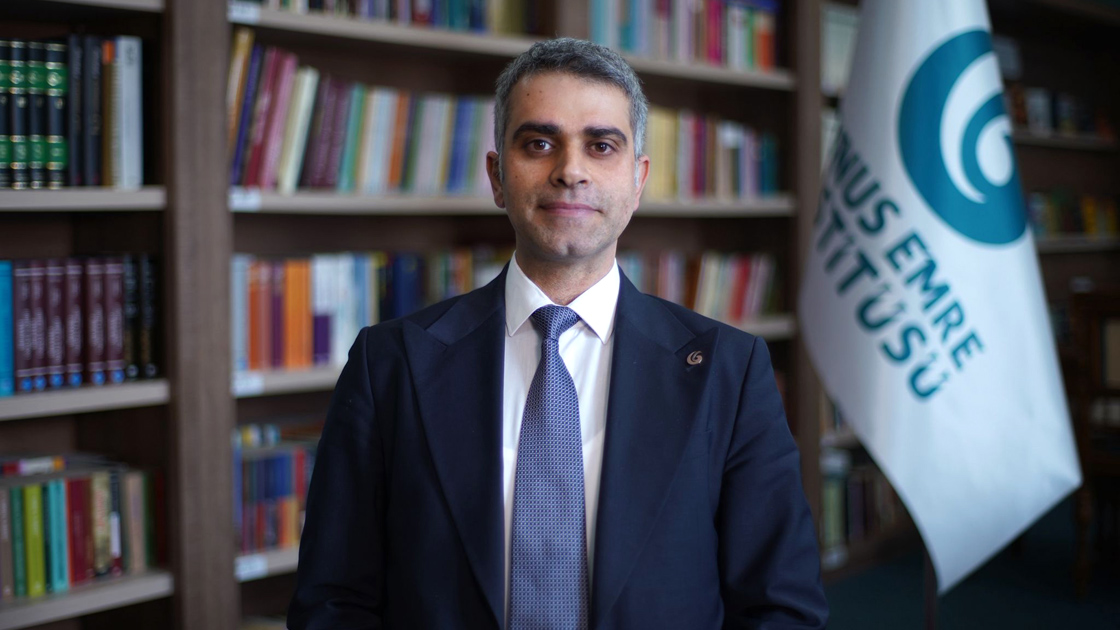
The mission of the Yunus Emre Institute is to increase Türkiye's international visibility, credibility and prestige. As to how that is put into practice in Hungary at the Budapest-based center with a history of well over a decade, its director, Asım Öksüz tells Diplomacy&Trade that “the Yunus Emre Enstitüsü aims to contribute to Türkiye’s cultural diplomacy and strengthen the historical and cultural ties between the two countries through its activities in Budapest. In this context, we organize cultural and artistic events almost every week, develop academic collaborations and conduct language teaching programs. One of our main objectives is to foster an accurate, up-to-date and multidimensional perception of Türkiye, Turkish culture and Turkish art among the Hungarian public.”
Located in the heart of the city
The Institute carries out cultural and artistic activities to promote Turkey and provides support for scientific work. Regarding the means it has at its disposal here in the Hungarian capital to carry out these activities, the Director highlights that the center in Budapest is located in a historic building on Andrássy Avenue, at a point considered to be the heart of the city. “Within this center, we have classrooms, an exhibition and conference hall, a Turkish guest house where we host our visitors, and many other functional spaces. However, our center is about to undergo a major renovation process, and therefore, we currently have to organize all of our activities outside the premises.”
He adds that by establishing collaborations with local universities, cultural institutions and civil society organizations, they are able to extend the reach and impact of their activities. “Thanks to both our physical and digital resources, we can engage with wide audiences,” he adds.
Humanity, tolerance and universal peace
Yunus Emre is a medieval symbolic name representing human values, love of people and social peace. Commenting on how that is reflected in the activities of the Institute, Asım Öksüz notes that Yunus Emre is a symbol of love for humanity, tolerance and universal peace. “Our Institute builds its activities upon this understanding. In the events we organize, intercultural dialogue, mutual understanding and respect are always at the forefront. This approach is strongly felt both by Hungarian participants and by all those who are interested in Turkish culture.”
Teaching Turkish at various levels
As regards the role the Institute plays in the teaching of the Turkish language in Hungary, the Director points out that “our Institute is one of the most important institutional bodies for teaching Turkish in Hungary. Our qualified Turkish teachers, who are experts in their field, provide Turkish language instruction using teaching materials prepared in accordance with the Common European Framework of Reference for Languages (CEFR). We offer courses from A1 to C1 levels and organize speaking, writing and translation workshops.”
The courses are structured as 36-hour programs, and placement tests are also administered for individuals who already have prior knowledge of Turkish. In addition to all these activities, the Yunus Emre Institute conducts, three times a year, the ALTE-accredited Turkish Proficiency Exam simultaneously across the world, enabling participants to officially certify their Turkish language proficiency.
Other popular programs
In addition to the language courses and examinations, the programs most popular with the audience/participants include Turkish cuisine workshops, book presentation programs, exhibitions and cultural promotion events. The Director is glad to state that “participants particularly appreciate the activities through which they can directly experience Türkiye’s daily life and culture. Feedback is generally characterized by high levels of satisfaction and repeated participation.”
He also extends his invitation not just to the readers of Diplomacy&Trade but also to the entire Hungarian public interested in Turkish culture to follow the Institute’s cultural activities through its social media accounts and “I would be delighted to welcome them to our events.”
Reaching audiences outside Budapest
Being headquartered in the heart of the Hungarian capital does not necessarily means the institute is Budapest-centered only. In fact, it is able to ‘explore’ other parts of Hungary with its activity. In agreement with that, Asım Öksüz underlines that “although Budapest is the center of our activities, we are also actively engaged with different cities across Hungary. Through collaborations with universities, cultural centers and local institutions, we strive to extend our programs throughout the country. From time to time, we reach audiences outside Budapest through events organized in various cities. In particular, we regularly carry out intensive cultural activities in cities such as Pécs, Szigetvár, Esztergom, Debrecen and Szeged.”
Shared historical heritage
This August will see the 500th anniversary of the Battle of Mohács that was a significant event in southern Hungary in the history of both countries. Regarding the Yunus Emre Institute’s plans to commemorate this anniversary, the Director emphasizes that “the Battle of Mohács was an important turning point in the history of both Türkiye and Hungary. On the occasion of this anniversary, we aim to take part as a stakeholder in academic events, panels and cultural programs that emphasize our shared historical heritage. Our goal is to ensure that this historical event is regarded not only as a battle, but also as an opportunity to better understand the historical ties between the two societies.”


Top 5 Articles
 What Awaits the Hungarian Economy in 2026 and 2027? April 24, 2026
 - Cherishing Italian Cultural Presence in Hungary September 3, 2026
- Consolidating the Good Bilateral Relations May 10, 2026
- Two Vantage Points, One Direction August 22, 2026
- Business, Consumer Confidence at Two-Year High in April April 23, 2026