In the second half of this year, it is the Kingdom of Denmark that holds the rotating Presidency of the Council of the European Union with overarching priorities such as a secure Europe and a competitive and green Europe. It is totally understandable why security, competitiveness and environmental protection are the most significant issues on this continent in 2025.
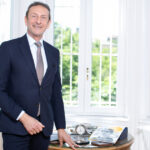
As to what sort of means the Danish EU Presidency has at its disposal to promote these most important aims, Ambassador Thorning highlights to Diplomacy&Trade that the slogan of the Presidency is ‘A strong Europe in a changing world’. “You can see that a changing world is a given circumstance. It's the new geopolitics we are living in. However, a strong Europe is by design, our common European design. So, this is basically what our Presidency is about: making Europe strong. This is the 8th time Denmark holds the Presidency. So, we've tried it before, but we are not complacent. It's not a presidency business as usual because times are as they are. One of our goals is taking on the role as honest broker, which means to broker compromises, to find solutions, to be the chair of everybody. We have tried it before, it's tested, that's how we approach it. And we wish to do all that in close cooperation with the European Commission with which we have good and close cooperation. This is also because now, it is time for action.”
On the Danish presidency agenda is a double summit in Copenhagen, an informal meeting of EU heads of state or government, followed by the seventh meeting of the European Political Community (EPC), which is broader than the European Union. It will be similar in early October to what took place during the Hungarian Presidency in Budapest in the fall of 2024, he notes.
The European Union is an increasingly important player on the global scene. Regarding the Danish Presidency view of the external relations of the EU vis-à-vis the United States, China and others, the Ambassador reminds that “it is a changing world, Europe's global weight is shrinking. Our relationship with the United States is under certain challenges. Again, this is a given circumstance. But ‘never let anything go to waste’ as we say. So, I think it's interesting to see that there are quite a lot of third countries that would like to enter into association agreements with the EU and particularly now: the good old stable European Union is an attraction. We should not forget that, and we should use that to our advantage. And this is also very much in the DNA of Denmark and therefore, of the Danish Presidency.”
Ensuring continuity
That of Denmark is part of the EU presidency trio that also includes Poland and Cyprus. Ambassador Thorning stresses that they see the trio as very important, because it ensures continuity. “This is what it is, because as one country only holds the presidency for six months. And you always stand on the shoulders of your predecessor. We stand on the shoulder of Poland as Cyprus will stand on our shoulders at the beginning of next year. This is essential because it ensures that we are not in a vacuum, there's continuity. Another thing with this trio worth noticing is it also ensures a north-south-east-west balance as well as that of smaller and bigger countries since Poland is a big country while Denmark and Cyprus are not.”
Particular honor and pleasure
Dr. Christian Thorning presented his letter of credentials in Hungary in September last year. When asked about the preparations for his tenure here, he recalls his personal story from over 30 years ago when he started his diplomatic career in the headquarters of the Ministry of Foreign Affairs in Denmark. “Very shortly after I embarked on this new diplomatic life, I was appointed Desk Officer for Hungary. That was at a time when our bilateral relations were very much focused on Hungary's entry into NATO and the European Union. Actually, when we subsequently held the rotating presidency of the EU in 2002, I was put in charge of the so-called drafting group in Brussels, a group of lawyers that drafted the accession treaty to the European Union of the then ten acceding countries, including Hungary. So, you see, for me now returning as His Majesty's Ambassador to Hungary is a particular honor and pleasure. It is kind of like the circle is completed. That's how I see it. Now, I sit here as ambassador in the Hungary that I knew so well 30 years ago.”
He adds that at that time, Hungary was about to enter into the EU institutions. “Now, of course, it is a full-fledged member and has been for a long time. Bilateral cooperation between Denmark and Hungary is very much encircled around the European Union and NATO but also around economic ties because there is a very fundamental presence of Danish business life here. I take it as my mission to visit as many Danish firms in this country as possible. They are scattered all over Hungary in many different sectors, from Nyíregyháza to Tatabánya. I have already had the chance to visit several of these companies, but there are many others to go to. So, this is my mission because that is how I get a feeling of what Hungary is really like.”
The Hussar connection
Another aspect, as he puts it, in his own little private mission as ambassador here, is to engage with the newly reestablished Hussar regiment in Hungary. “As you might know, just a few years ago, a Hussar regiment of mounted soldiers was set up again as a unit within the Hungarian Army as a continuation of a long and proud history of the Hussars. Having been dismantled after the Second World War by the then regime, it has now come back to life. And there's a connection, of course, because we have the Guard Hussar Regiment of the Royal Danish Army. One of the units of this is the Guard Hussar Regiment Mounted Squadron, which provides mounted escorts for the Danish royal family and carries out ceremonial services with the Royal Danish Army. Interestingly enough, this is the oldest regiment in the Danish army. It dates back to 1614, the time of King Christian IV, who established it, and it has been in existence ever since. Speaking of their use for ceremonial reasons, for instance, when the Hungarian ambassador presents credentials to the King in Copenhagen, it is this guard of Hussars escorting the ambassador.”
Positive role by Danish investors
Discussing economic relations between Denmark and Hungary, Ambassador Thorning says he characterizes them as very solid. “I just looked into the figures: Danish exports to Hungary over the last several years have gone up a good 4% while Hungarian exports to Denmark have increased by more than 5%. As for Danish investments in Hungary, there are over a hundred Danish units, entities, businesses, which are either subsidiaries of Danish companies or otherwise owned by Danish investors operating in this country. They are generating employment for more than 20,000 people, which is remarkable. These businesses bring here more than just economic activity, it is also high added value and environmentally friendly technologies. What they also bring is a kind of a Danish HR approach on personnel as to how to do business with your employees. And last but not least, they also engage in the local communities where they are based. As mentioned before, I've already had the chance to visit some of these places and have spoken to the mayors there. They are testifying that there's very good interaction between the Danish businesses and the local communities in many respects.”
Regarding how satisfied Danish companies with the Hungarian business environment are, the Ambassador’s experience is that “what I hear in the Danish Business Club that we have here in Hungary is that they are by and large satisfied. The testimony to that is that many of them were established 30 years ago or more and they are still here. Actually, some of them even started before the regime change in 1989. Just recently, I went to a 25-year anniversary of one of these companies. This fall, I will go to another one that has consolidated itself and yet another 25 years anniversary coming up. These businesses are not only still here, they're thriving, they are expanding. That's the impression I have.”
Community feeling and trust
Civil society in Denmark is very strong. “You normally say that if you put three Danes in a room, they will immediately create some sort of association and they will elect a president, a vice president and a secretary of the committee. This is a kind of Danish characteristic, that's in our DNA. It has been so, well, basically for many decades, possibly centuries. We approach it in Denmark with a very strong feeling. I think Hungary has a different tradition and history in this respect and that's also why – as I see it – you cannot implement one in one the Danish way of doing it. That is because such a thing has to be done organically within Hungary. But of course, you can see how we have developed it and nursed it for many, many decades in Denmark. You could consider doing the same. One example I would like to mention is that in Denmark helping each other in the community is very much something, which is on the grassroot level. For instance, there are absolutely ordinary citizens who – in their spare time – are also football trainers and so forth for the young guys and girls in their local community. When I grew up, I was taking swimming lessons and it was the fathers and mothers of my peers who were the swimming teachers. That's the way we do it, and of course, what it creates is this community feeling – and trust. Because trust perhaps is another thing when everybody is looking to Denmark and say, ‘why are you so happy and content?’. It's about trust. I mean, the state of Denmark is us. It's not something else. The state is us. The state is the local sports football club or whatever that we are all part of,” the Ambassador explains.
Hungarian household name in Denmark
When talking about bilateral relations in culture, another personal experience of his own comes to his mind. “I remember how I learned about Hungary in my childhood years. And that was very much down to one person, Péter Eszterhás, born in 1940, who is a very well-known stage director, movie and television director in my country. He became a very acclaimed translator of Hungarian literature into Danish. I remember him because he then also made it to television and thus, he became a household name in Denmark. He is a child of 1956 because that is when he and his parents emigrated to Denmark as refugees. And then, as I said, he became an important figure in Danish cultural life. So, you can see sometimes one person can have that wider impact that, for me, very much encapsules what Hungary is.”


Top 5 Articles
 What Awaits the Hungarian Economy in 2026 and 2027? April 24, 2026
 - Consolidating the Good Bilateral Relations May 10, 2026
- Cherishing Italian Cultural Presence in Hungary September 3, 2026
- Two Vantage Points, One Direction August 22, 2026
- Business, Consumer Confidence at Two-Year High in April April 23, 2026