
The political strength of our continent in the coming decades depends on the accession of the Balkan countries to the European Union. This is the most important geostrategic investment of our time, because security, competitiveness, and enlargement are now inseparable: without completing its reunification, the European Union will never achieve the scale necessary to compete in today’s world.
The Balkans belong to Europe historically, geographically, and politically. Italy has made this one of the cornerstones of its foreign policy: as a country bordering the Adriatic and the Mediterranean, we know full well that the security of our seas also depends on the stability of the region. We therefore strongly support accelerating these countries’ EU accession process in order to reunite the European family and thereby expand the sphere of peace and development opportunities as much as possible.
Italy’s commitment is reflected in its extensive diplomatic presence and ongoing political dialogue: since 2022, more than a hundred high-level visits, bilateral meetings, and multilateral initiatives have accompanied the reform processes in the candidate countries and tangibly supported their rapprochement with the European Union.
In this spirit, Italy initiated the creation of the informal group “Friends of the Balkans,” which brings together those Member States most committed to ensuring that the European Union’s attention remains focused on the region. Today’s meeting in Rome – attended by the region’s foreign ministers – once again reaffirms Italy’s firm political commitment to giving new impetus to the European integration of the Balkans.
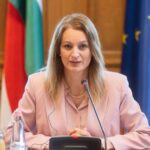
In line with this objective, Italy has decided to invite Hungary to this meeting for the first time. Although Hungary is not a member of the informal group, it is deeply committed to the cause of Western Balkan enlargement. Deputy Prime Minister and Minister of Foreign Affairs Anita Orbán will therefore also participate in the meeting.
Accession requires far-reaching reforms: strengthening the rule of law, improving the efficiency of public administration, promoting digitalization, and enhancing the quality of the institutional system. Italy supports these efforts with concrete practical measures. We play a leading role in the Twinning programs and the TAIEX program, which provides short-term technical assistance; these are central elements of the accession process, as they transfer expertise, experience, and institutional capacity to candidate countries. Among EU member states, Italy provides the most experts for these programs in the Balkans: we are therefore convinced that integration must offer tangible benefits in the daily lives of citizens and businesses even before accession, thereby strengthening confidence in the European project. For this very reason, we consider it a short-sighted approach to delay the accession process of countries – such as Serbia – that have already made significant progress in numerous key areas.
Investing in the development of the Balkans means investing in strengthening Europe. Italy is already one of the region’s most important economic partners, thanks in part to the many Italian companies operating there. Bilateral trade exceeds 10 billion euros, and some 800 Italian companies operate in the region, contributing to local economic growth, high-value-added employment, the modernization of production, and the green and digital transitions. As part of our development cooperation, we provide support in key sectors, ranging from healthcare and infrastructure to energy and vocational training.
Equally important is the issue of connectivity. The Balkans serve as a link between the Adriatic, the eastern Mediterranean, and Central Europe. That is why we support the development of major infrastructure corridors, above all the 8th Pan-European Transport Corridor, which will link the Adriatic Sea to the Black Sea, as well as the development of rail, port, energy, and digital networks. In the same vein, we view the India–Middle East–Europe Economic Corridor (IMEC), on whose implementation we are working jointly with India and the Gulf countries, in a similar light. Thanks to its favorable geographical location, Italy aims to become the European terminus of these new routes, while making the Balkans a natural bridge between Central Europe and the Eurasian corridors. The issue of connectivity is closely linked to our continent’s strategic autonomy, the security of supply chains, and food security. That is why we have also invited FAO Deputy Director General Maurizio Martina to today’s meeting.
European integration, economic development, and connectivity require a stable security environment. Italy bears primary responsibility in this area as well: we have led the NATO KFOR mission in Kosovo fourteen times, the EULEX Kosovo mission twice, and the EUFOR Althea operation in Bosnia and Herzegovina three times; we have contributed to the region’s stability and the implementation of the Dayton Peace Agreement through both civilian and military means.
The integration of the Balkans is a geopolitical decision for Europe: the region’s full EU membership would strengthen the Union’s southeastern flank, enhance its stability, and increase its ability to assert its interests on the world stage. Italy will continue to work to ensure that the region’s EU accession process remains credible and merit-based, while at the same time becoming faster, more predictable, and more accessible to citizens and businesses. For our continent, this is first and foremost a matter of historical consistency, and only secondarily a strategic necessity.


Top 5 Articles
 Cherishing Italian Cultural Presence in Hungary September 3, 2026
 - Consolidating the Good Bilateral Relations May 10, 2026
- Indotek Group Acquires 100% of Auchan Magyarország June 26, 2026
- Two Vantage Points, One Direction August 22, 2026
- Ágnes Forsthoffer, Interim Hungarian President July 20, 2026