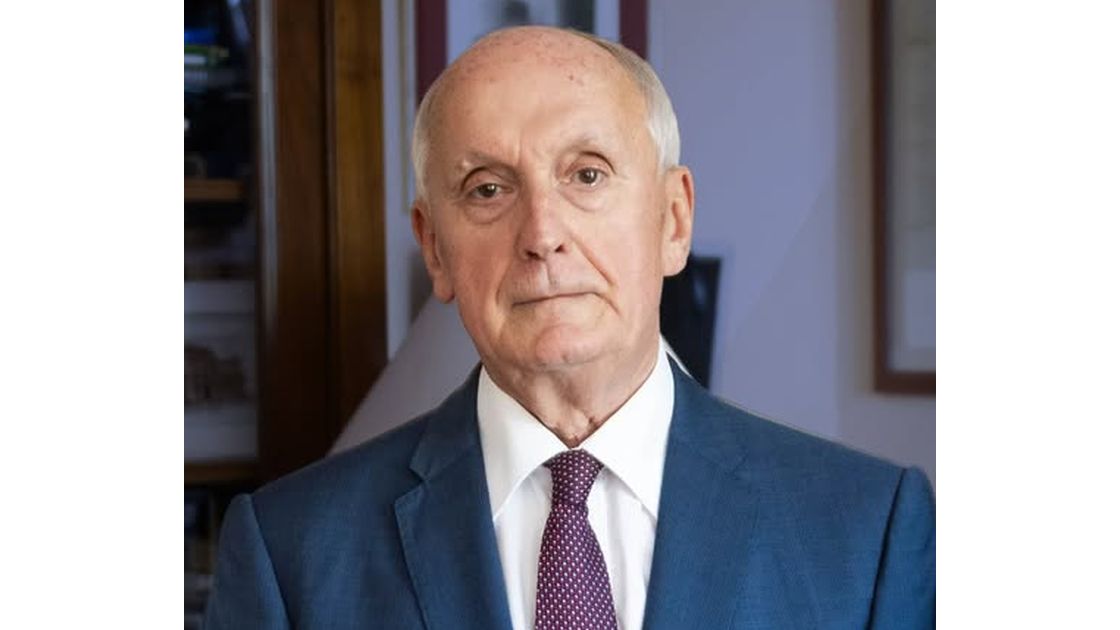

Hungarian Parliament elected Dr. András Baka, the former head of the Supreme Court, as President of the Republic on Tuesday. The candidate of the ruling Tisza Party was elected with 140 votes in favor and 6 against in a secret ballot.
Born on December 11, 1952 in Budapest, András Baka obtained a doctorate in law at the Faculty of Political Science and Law at ELTE University in 1978. From 1978 to 1990, he was a research fellow at the Institute of Political Science and Law of the Hungarian Academy of Sciences, and from 1990 to 1998 he served as Director-General of the College of Public Administration.
He is a researcher in the field of human rights and minority rights, and has published numerous works on these topics.
He served as an independent MP in 1990-1991, during the first parliamentary term following the change of regime. In 1991, he resigned from his parliamentary seat after being elected a judge of the European Court of Human Rights (ECHR), where he served as the Hungarian judge of the Strasbourg-based human rights court until 2008.
Between 2008 and 2009, he served as President of the Budapest Court of Appeal, and in June 2009, parliament elected him President of the Supreme Court for a six-year term. However, on December 31, 2011, his term came to an end pursuant to the transitional provisions of the Fundamental Law, which was enacted by the parliamentary majority of the then Orbán government that András Baka was critical of. Following his removal, András Baka served as a presiding judge at the Curia that replaced the Supreme Court.
Parliament has now elected a new president after President Tamás Sulyok's mandate ended on July 20 following the 17th amendment to the Fundamental Law. Ágnes Forsthoffer, the speaker of parliament, has been exercising the rights of president since then.
András Baka will assume office on the eighth day following the announcement of the election result.
In his inaugural speech, András Baka emphasized that the previous period - by which he meant the 2010-2026 rule of the Orbán government - had pitted social groups against each another, fostering the belief that those with differing views were not merely mistaken but enemies. Referring to results of the April parliamentary elections, he declared that the recent change demonstrated that a society could reclaim its self-determination.
He added that that before 2026, the Hungarian state had failed to meet one of the most fundamental requirements of a democratic rule-of-law system: the genuine separation of powers and a functioning system of checks and balances.
"Hungarians cannot avoid confronting the past at the beginning of a new era," the president-elect said, adding that Hungary had "wasted a generation's worth of time, slipping from a model student during the time of the democratic transition to the ranks of lagging nations."


Top 5 Articles
 What Awaits the Hungarian Economy in 2026 and 2027? April 24, 2026
 - Cherishing Italian Cultural Presence in Hungary September 3, 2026
- Consolidating the Good Bilateral Relations May 10, 2026
- Two Vantage Points, One Direction August 22, 2026
- Business, Consumer Confidence at Two-Year High in April April 23, 2026