
It is incredibly exciting to witness the amazing cultural exchange between Japan and Hungary. Despite the geographical distance separating our nations – a considerable 9,000 kilometers apart, Japan and Hungary are far from being distant or unfamiliar entities to each other. Japanese restaurants are practically ubiquitous – I’ve lost count, and sushi is a supermarket staple. Similarly, Japanese novels, including the translated works of literary giants like Yukio Mishima and Haruki Murakami, and its popular comics (Manga) grace Hungarian bookshelves.
Indeed, Japanese culture is deeply interwoven into the fabric of daily Hungarian life. The enthusiasm among the Hungarians for all things Japanese both delights and occasionally surprises me. Upon my arrival here, I was deeply impressed to find that events such as Haiku (Japanese poem) Day and Japanese Garden Festival are held every year here in Hungary.
The Budō boom: a deeper connection
In particular, the dedication of Hungarians to budō, traditional Japanese martial arts, truly captivates me. In a nation with such a strong equestrian heritage, the embrace of budō is extraordinary. From judo and karate to kendo, aikido, kyūdō (archery!), sumo, iaidō (sword drawing), naginata (pole weapons), and even kobudō (classical martial arts), the range of practiced disciplines is truly impressive. Dojos and clubs are scattered across the country, from bustling Budapest to peaceful rural towns, filled with practitioners of all ages and genders. What accounts for this budō boom? Let's delve into the connections.
Karate's popularity: beyond the playing field
The remarkable popularity of karate stands out in Hungary. While football reigns supreme as the most popular sport, closely followed by basketball and handball, karate secures a remarkable fourth place. With approximately 50,000 practitioners, Hungarian karateka have achieved notable international success, culminating in an Olympic medal at the 2020 Tokyo Games. The diversity of karate styles practiced here is equally impressive. I had the privilege of attending an international tournament of full-contact Kyokushin karate in Szolnok, witnessing firsthand the skill and dedication of Hungarian karate practitioners. Incredibly, karate is integrated into the physical education curriculum in as many as 250 secondary schools in Hungary. The annual ‘Okinawa Day’ event, celebrating the origins of modern karate with visiting Okinawan karate masters and Ryukyu (old name of Okinawa) dancers provided our embassy with a valuable opportunity to showcase the Hungarians’ profound engagement with karate as well as charms of Okinawa prefecture, consisting of Japan’s southernmost beautiful islands.
Kendo's legacy: honing skill and spirit
My own childhood experiences with kendo – the satisfying thwack of the shinai (bamboo sword), and the occasional, slightly less satisfying, thwack received – give me unique insight. Hungary is a leading kendo nation in Europe, with a vibrant 40-year history, hosting annual tournaments like the Sakura Cup and Hungary Cup. This year's visit by Koji Onda, a Hanshi 8th Dan (a rank held by only 0.07% of Japanese kendo practitioners), was a momentous occasion. His lectures at ELTE University eloquently emphasized that budō transcends sport; indeed, it's a journey of personal development, a path from jutsu (technique) to dō (the way). The spiritual depth Mr. Onda conveyed resonated profoundly with the Hungarian audience.
A century of connection: judo's global stage
The budō connection between our countries spans over 120 years. In 1906, Kichisaburo Sasaki introduced judo to Hungary at the invitation of the Austro-Hungarian Empire. His publication of a Hungarian-language book, ‘Djudo’, was a testament to the early enthusiasm for Japanese culture in Hungary. This legacy continues to flourish, particularly in judo, the only budō discipline constantly featured in the Olympic Games. Hungary’s position is increasingly significant in the world judo community with hosting the International Judo Federation headquarters. This year's World Championships in Budapest, attended by dignitaries including President Tamás Sulyok of Hungary and Her Imperial Highness Princess Tomohito of Mikasa of Japan, were a resounding success with strong competitors from all around the globe.
Sumo's enduring charm: a teacup of friendship
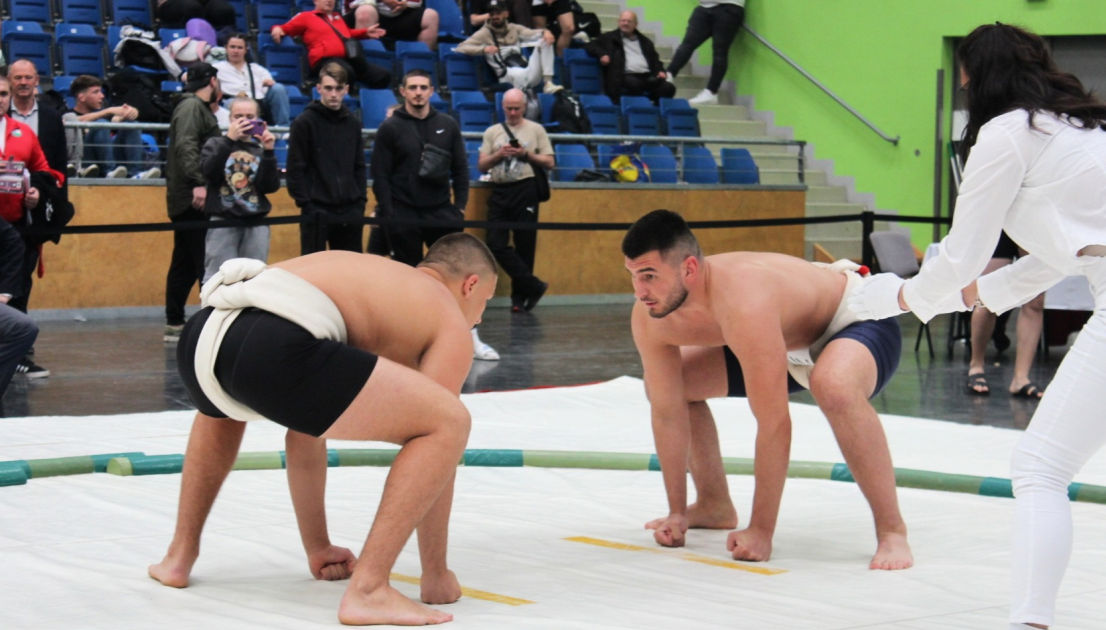
And the story continues… Hungary's unique connection with sumo wrestling deserves special mention. The winner of Grand Sumo Tournament has been awarded the Hungary Friendship Cup, a tradition celebrating its 40th anniversary this year. Redesigned as an exquisite teacup by the renowned Herend Porcelain Manufactory in 2019 to commemorate the 150th anniversary of our diplomatic relations, it serves as a great symbol of this enduring bond between the two countries. Sumo, embodying Japanese culture of harmony and spiritual strength also enjoys significant popularity in Hungary. As we have witnessed a great success of European Sumo Championships in Szigetszentmiklós this year, I encourage everyone to visit next year’s sumo tournament in Veszprém and experience the spectacle of this captivating sports.
A shared resonance: respect, growth, and harmony
What is the extraordinary connection between Hungary and Japanese budō? I believe it stems from shared aesthetic sensibilities and values. Budō's emphasis on respect, spiritual growth and harmony of mind and body deeply resonates with traditional Hungarian values. As the Japanese Ambassador to Hungary, I sincerely hope that the philosophical depth of budō, which extends far beyond the realm of sport, will continue to attract Hungarians in the years ahead. I also firmly believe that stepping onto the dojo mat to experience budo's transformative power for the mind and body will undoubtedly further strengthen the wonderful bond between Japan and Hungary.


Top 5 Articles
 What Awaits the Hungarian Economy in 2026 and 2027? April 24, 2026
 - Cherishing Italian Cultural Presence in Hungary September 3, 2026
- Consolidating the Good Bilateral Relations May 10, 2026
- Two Vantage Points, One Direction August 22, 2026
- Business, Consumer Confidence at Two-Year High in April April 23, 2026