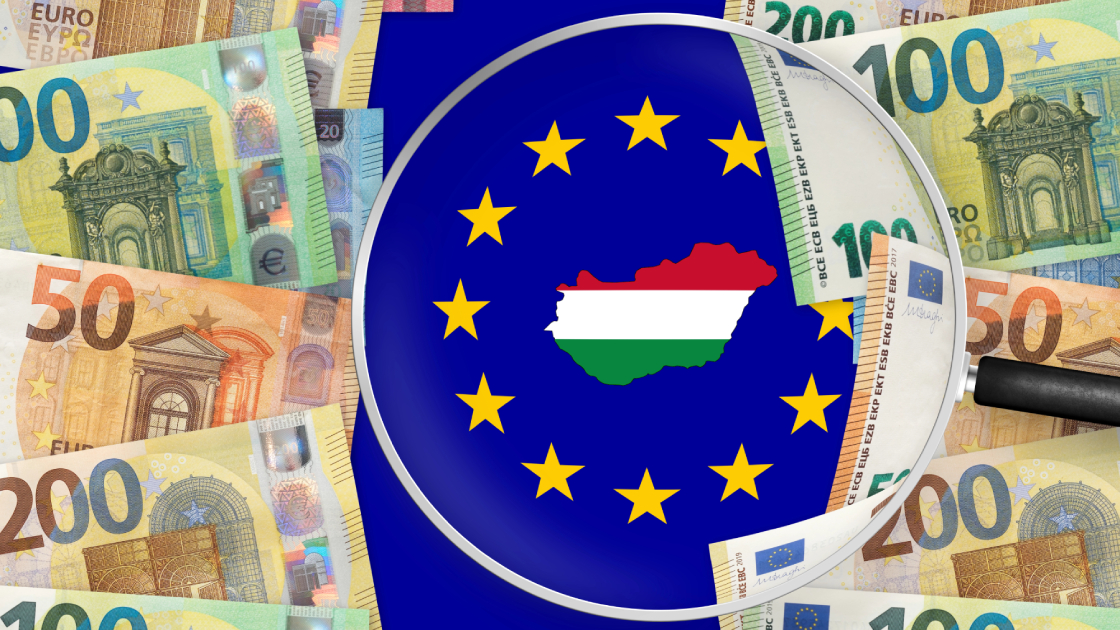

Investor confidence in Hungary has solidified in recent months; the coming period will be about building credibility, implementing next year’s and the medium-term fiscal path, which could lead to the adoption of the euro by 2032, the chief economist at ING Bank, Péter Virovácz, at a press event in Budapest this week.
As he noted, the international investment community views Hungary’s economic developments in a fundamentally positive light: in meetings with London-based analysts, it is increasingly common to hear that Hungary is considered one of the region’s stable investment destinations – a significant shift from the recent past, as Poland’s economic outlook had previously been viewed more favorably.
The first steps toward adopting the euro have been taken: the political will is in place, the rule-of-law milestones have been met, the 2026 budget has been revised, and the National Bank of Hungary has adjusted its inflation target. Regarding the medium-term consolidation path through 2030, he noted that the numbers “look good, and the plans are realistic.”
ING expects Hungary to join the ERM II exchange rate mechanism in 2029, meet the Maastricht criteria in 2030, submit its application for membership in 2031, and adopt the euro on January 1, 2032.
He believes that the 2027 budget and the implementation of the consolidation program through 2030 will be the most important tests of economic policy.
The budget deficit in 2026 could be 6.9% – better than the government’s projections – and could decline to 4.9% in 2027, 4.2% in 2028, 3.5% in 2029, and 2.8% in 2030. The primary deficit could decline steadily and reach near zero by 2030.
Improved fiscal discipline could also lead to a favorable change in credit ratings, and starting in 2027, upgrades of 2-3 notches compared to current credit rating levels could occur.
Regarding the economic outlook, he noted that in the third quarter, the economy expanded for the sixth consecutive year. The engine of growth is consumption, supported by strong consumer confidence and real wage growth, as well as industrial production, which continues to show steady growth.
Capacity utilization may improve further with the addition of new production capacity, such as the BMW and Mercedes plants, which will help boost net exports. After a slight deficit this year, the current account balance could turn positive next year.
According to Péter Virovácz, the decline in the construction industry came as no surprise, and a complete restructuring of the sector is inevitable. The outlook is clouded by uncertainty regarding the development of the order backlog after the first quarter of 2027.
The situation in agriculture is also being worsened by the historic drought this summer, which could reduce this year’s GDP by as much as one percentage point – similar to what happened in 2022 – and it cannot be ruled out that next year will not see the rebound experienced in 2023.
The financial institution’s analysts expect GDP growth of 1.8% by 2026, which could accelerate to 2.7% in 2027 and 3% in 2028.
Inflation, following this year’s 1.9%, could reach 4% by mid-2027 and average around 3.4% annually due to rising energy prices, before moderating to 2.9% in 2028.
A potential resurgence of the trade war could cause inflationary pressure globally, which could lead to higher government bond yields, he said.
According to the analyst, the tight labor market and the demographic trap pose constraints on growth, and any restrictions on the recruitment of foreign workers continue to pose a risk.
Regarding wage trends, he noted that in a low-inflation environment, we must prepare for lower wage growth; he expects a 5% increase in the minimum wage next year, which – due to tax credits – will still result in real wage growth of around 10% for lower-income earners, thereby also supporting consumption and, consequently, GDP growth.
According to ING’s base-case scenario, the base rate could remain at 5.5% throughout the year, falling to 5% by the end of next year and to 4.5% by the end of 2028.
ING expects the euro/forint exchange rate to fluctuate between 350 and 370 in the coming years. Movements within this range will be determined primarily by the international risk environment, expectations of interest rate cuts, and the implementation of fiscal consolidation. They project an exchange rate of 360 forints by the end of this year, as well as by the end of 2027 and 2028.
He also noted that economic growth and catching up with other economies could be aided if the government supports medium- and large-sized Hungarian companies – particularly in the pharmaceutical, food and financial sectors – that could become regional or global players through “investments” and foreign acquisitions. Reacting to the midterm elections, Péter Virovácz said that a Democratic victory could have a negative impact on AI investments in the longer term, a view confirmed by initial stock market reactions: stock prices fell and the US dollar weakened.


Top 5 Articles
 Cherishing Italian Cultural Presence in Hungary September 3, 2026
- Consolidating the Good Bilateral Relations May 10, 2026
- Indotek Group Acquires 100% of Auchan Magyarország June 26, 2026
- Two Vantage Points, One Direction August 22, 2026
- Ágnes Forsthoffer, Interim Hungarian President July 20, 2026