
This year, between August 17 and 20, the traditional Festival of Folk Arts in Budapest will be enriched with special Eastern programs: three South Korean masters will present the traditional arts and crafts of their country. At this popular event in Buda Castle, masters Lee Jongyoon, Lee Sangbae, and Kim Suyeon will demonstrate the meticulous nature of three different art forms with centuries of history.
Najeonchilgi is one of the most delicate forms of Korean decorative art: carefully cut mother-of-pearl inlays are applied to lacquered surfaces, creating beautiful patterns and motifs. Mother-of-pearl inlay has been part of Korean culture for over 2,000 years, and its contemporary practitioners are considered important cultural preservers in South Korea.
Thanks to the collaboration between the Festival of Folk Arts and the Korean Cultural Center, visitors can admire the most important tools and raw materials used in the production of najeonchilgi, as well as the diversity of mother-of-pearl varieties. Master Lee Jongyoon will give a live demonstration, where we can observe up close how the patterns are applied to the mother-of-pearl and how they are shaped into unique and unrepeatable creations through precise handwork. As part of an interactive workshop, skilled art lovers can make their own small najeonchilgi souvenirs.
Master Lee Sangbae is a craftsman of two ancient Korean art forms: calligraphy and muninhwa painting. Calligraphy – the art of "beautiful writing" – is not only a technical practice, but also a way of disciplining the mind in Korean culture. While calligraphers in the West generally write with a pen, in Asia the brush remains the main tool, as the master demonstrates. Muninhwa, or "literati painting," is a harmonious combination of poetry, calligraphy, and painting. The essence of the genre is the representation of the inner world—it tells of thoughts and feelings in visual form. We can get closer to this at this year's Festival of Folk Arts.
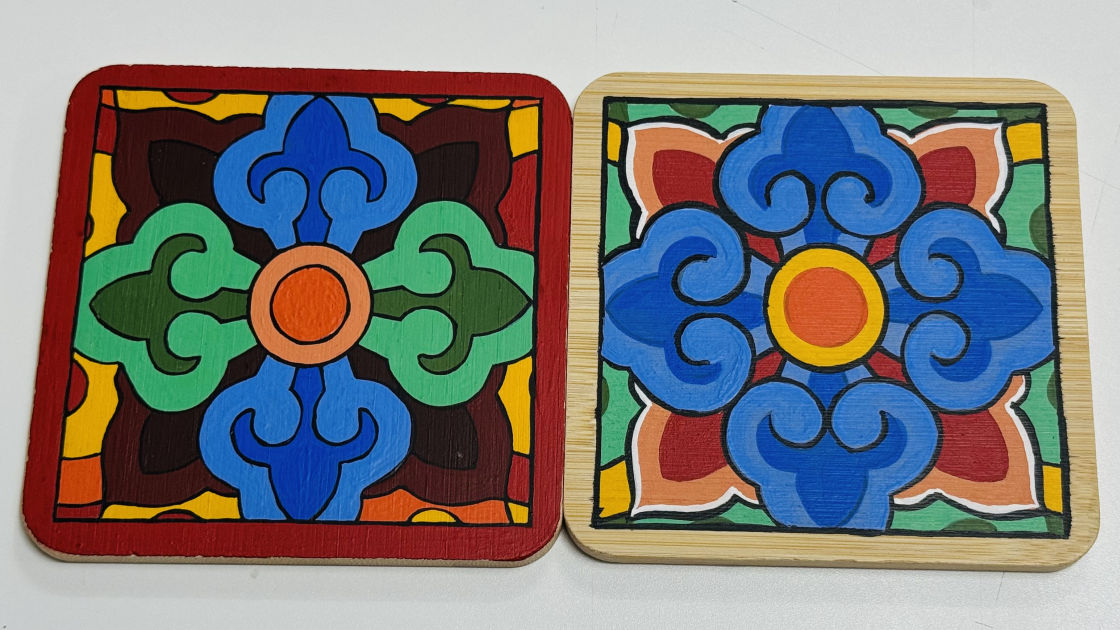
Dancheong is a painting technique originally used to decorate temples and palaces, in which five basic colors (red, green, yellow, blue, and black) are combined in various symbols. The decoration serves not only aesthetic purposes: it protects against natural influences and pests, but according to Korean beliefs, it also wards off evil spirits.
Master Kim Suyeon will demonstrate how dancheong patterns can be applied to paper crafts. Visitors to the stand can decorate coasters using this special technique. They can also try their hand at the traditional Korean paper game of takji, in which painted paper cards are spun against each other to measure their strength.


Top 5 Articles
 What Awaits the Hungarian Economy in 2026 and 2027? April 24, 2026
 - Consolidating the Good Bilateral Relations May 10, 2026
- Cherishing Italian Cultural Presence in Hungary September 3, 2026
- Two Vantage Points, One Direction August 22, 2026
- Business, Consumer Confidence at Two-Year High in April April 23, 2026